


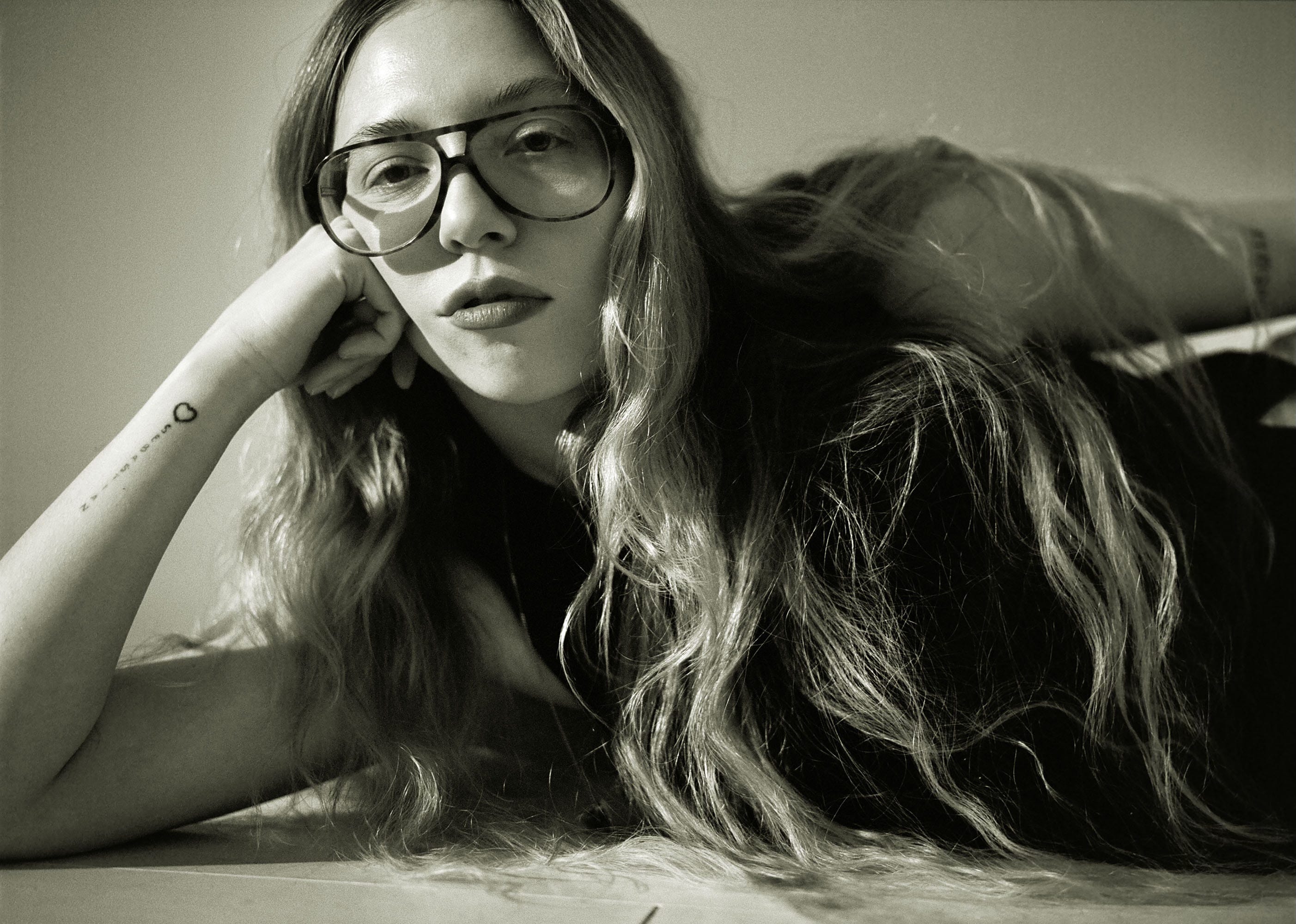
Interview by REILLY DAVIDSON
Photos by REBEKAH CAMPBELL
After a decade of image-making, photographer Zora Sicher has found new creative outlets in sculpture and poetry. See: a nude self-portrait printed with an acrylic gloss and displayed partly crumpled on a gallery floor, or concrete-style prose inked on plywood in the silhouette of a world map. These works explode the photograph, even as her honed eye remains their anchor.
Reilly Davidson: You were born and raised in Brooklyn. How have you seen the city change?
Zora Sicher: Sometimes I describe it as Stockholm Syndrome. I mean, it’s such a great place, but I wonder if I would actually still be here if I wasn’t born here. I’m really lucky to have the foundation of people that I grew up with, and every time I’m away, I end up missing it heavily. When I go to other places, it feels like there’s a lot more space and community for a younger art community, but there are still people here creating their own spaces, like Market Gallery, because there’s the necessity for it.
Reilly: You began making images quite young...
Zora: When I started taking photos,I was documenting my friends on the street. A photographer reached out to me to do street-casting, then i-D published my images online. From there I fell into fashion— my first internship was with Ryan McGinley. Then New York magazine started hiring me to go take portraits; once they had me shoot a group of retired Rockettes. I was always much more interested in people than just fashion.
Reilly: After so much time committed to being a photographer, why did you pivot to sculpture?
Zora: I’ve always had this desire to make things more tactile. It only recently occurred to me that images could jump out of the frame. I started photography in the darkroom, where you see magic appear on a page. Now I want to extend this even further than this quote unquote photo-sculpture. It’s a funny middle ground between wanting to figure out how I can emulate the feeling of looking at the 100,000 images on my phone and returning them to a tactile nature. I have been really obsessed with this idea of destroying things and putting them back together. Photography is the main tool I have, but the images are trying to get out of the frame.
“I have been really obsessed with this idea of destroying things and putting them back together.” — Zora Sicher
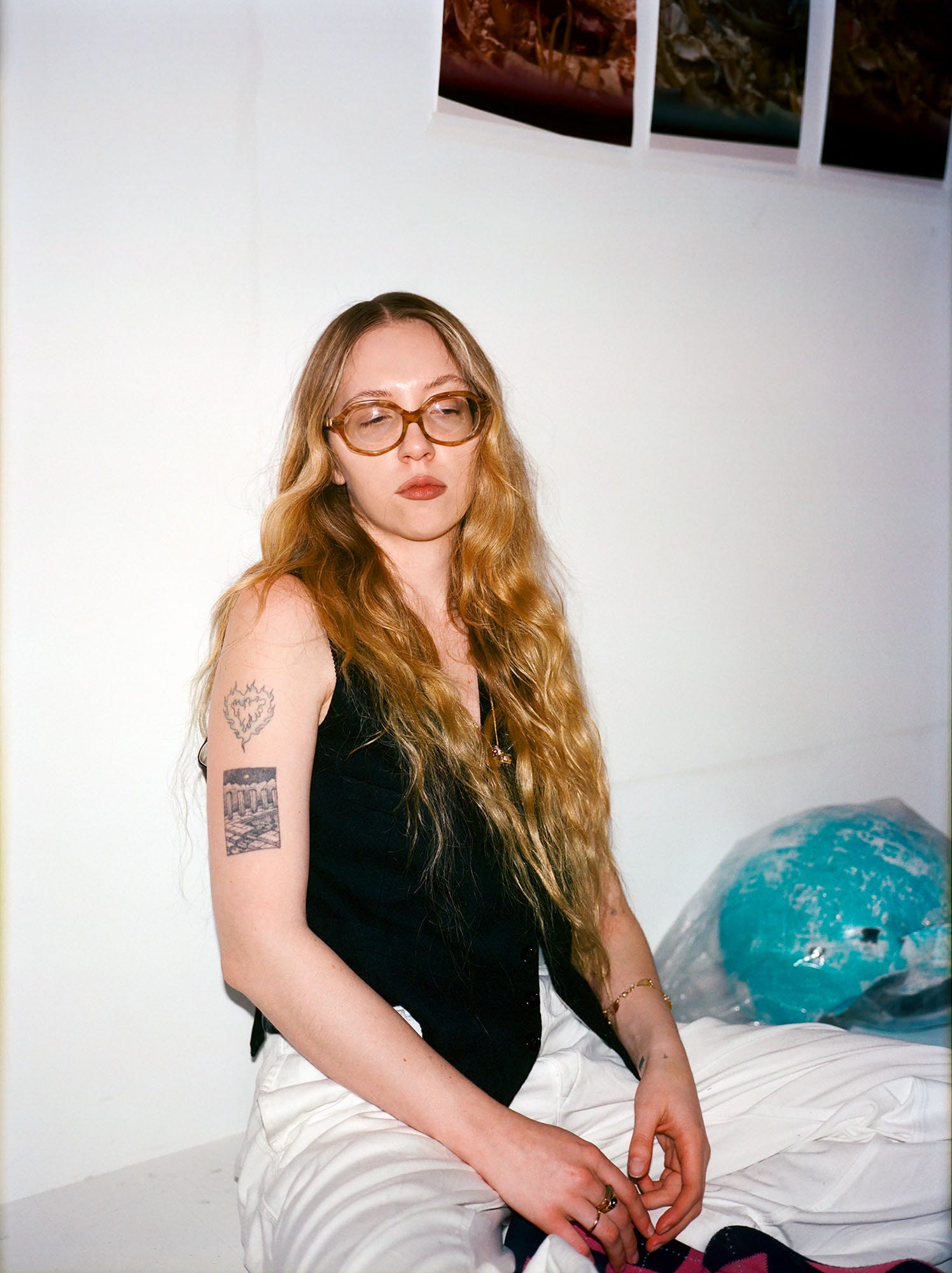
Reilly: Is staging an image important for you, or would you rather go in and document everything as is?
Zora: When you are photographing, you have this device that you’re using to create the images, so in theory, I can control the subject in front of the camera to some extent. When you’re staging something, you are playing God in a funny way.
Reilly: Absolutely.
Zora: But, like, God for what? For who?
Reilly: For yourself…
Zora: For me, yeah. What’s the line between the staged image and the documentary image? I think the work that I’m sitting on is exactly that middle space.
Reilly: I feel connected to that. I have O.C.D., so I really love finite categories. But I’m also scared of overly defining something… What if there’s a grey area?
Zora: I get really fixated on that idea.You can drive yourself crazy with the thoughts of control and what’s real, especially in terms of photography where I have been this observer in a way. With sculpture, being able to write text and then display it on a piece of wood, I can make this all on my own and don’t need to rely on other people.
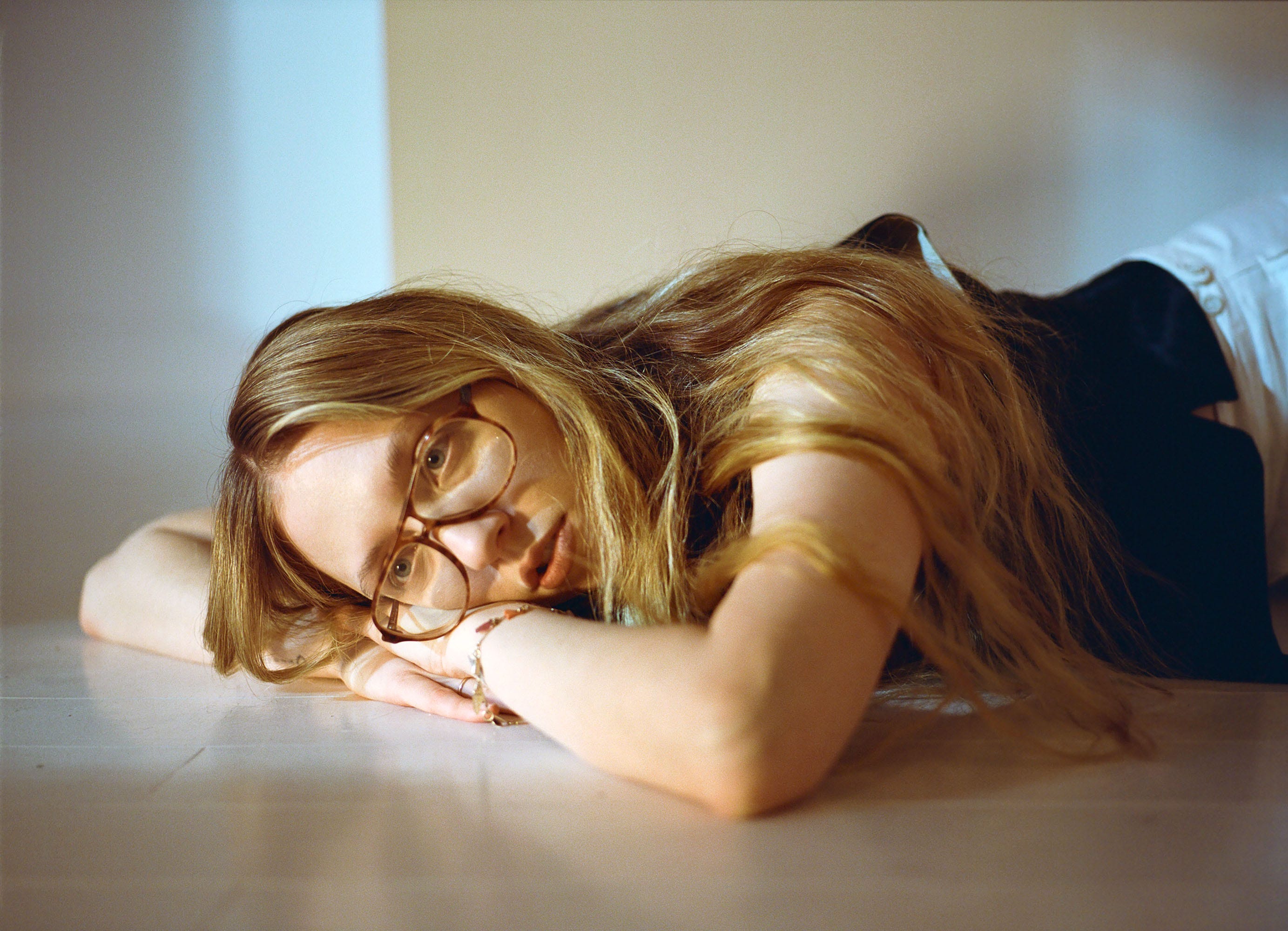
Reilly: How much are you putting yourself into the images that you’re making?
Zora: I don’t think I personally could ever have an objective stance. Looking through my archive, it suddenly feels a little bit like a mirror. There are a lot of nudes in my new book, and I am almost learning about myself through the women who allow me to observe them.There is the deeper part of my psyche in all the choices I make. I don’t know if there’s any concrete answer. I’m just pursuing a feeling
Reilly: Throughout history, photographers have looked at other photographers and restaged images. Nothing is untouched, it feels like.
Zora: Every day, I see someone online copying someone else. We’re at this strange point in history… Where do we go?
Reilly: Can anything be new? I think it’s better to move past being purely nostalgia-pilled. So many young people now are into Y2K or they’re interested in the ’90s. Growing up, I couldn’t have anticipated A.I. and the technocracy—I wanted to be a pop star, but now they last for half a year and then expire.
Zora: Well, that’s another thing. The concept of celebrity has changed, and our attention spans, too. In this age of repetition, I don’t know where we go. How do I make sense of all the formats? That’s what all these weird fragmented pieces of work began to be.There’s this future-phobia: The future was always a really interesting motif in my mind, but now it has transformed into something completely different. It feels like we’re in an interesting moment where there’s going to be a big upheaval.