


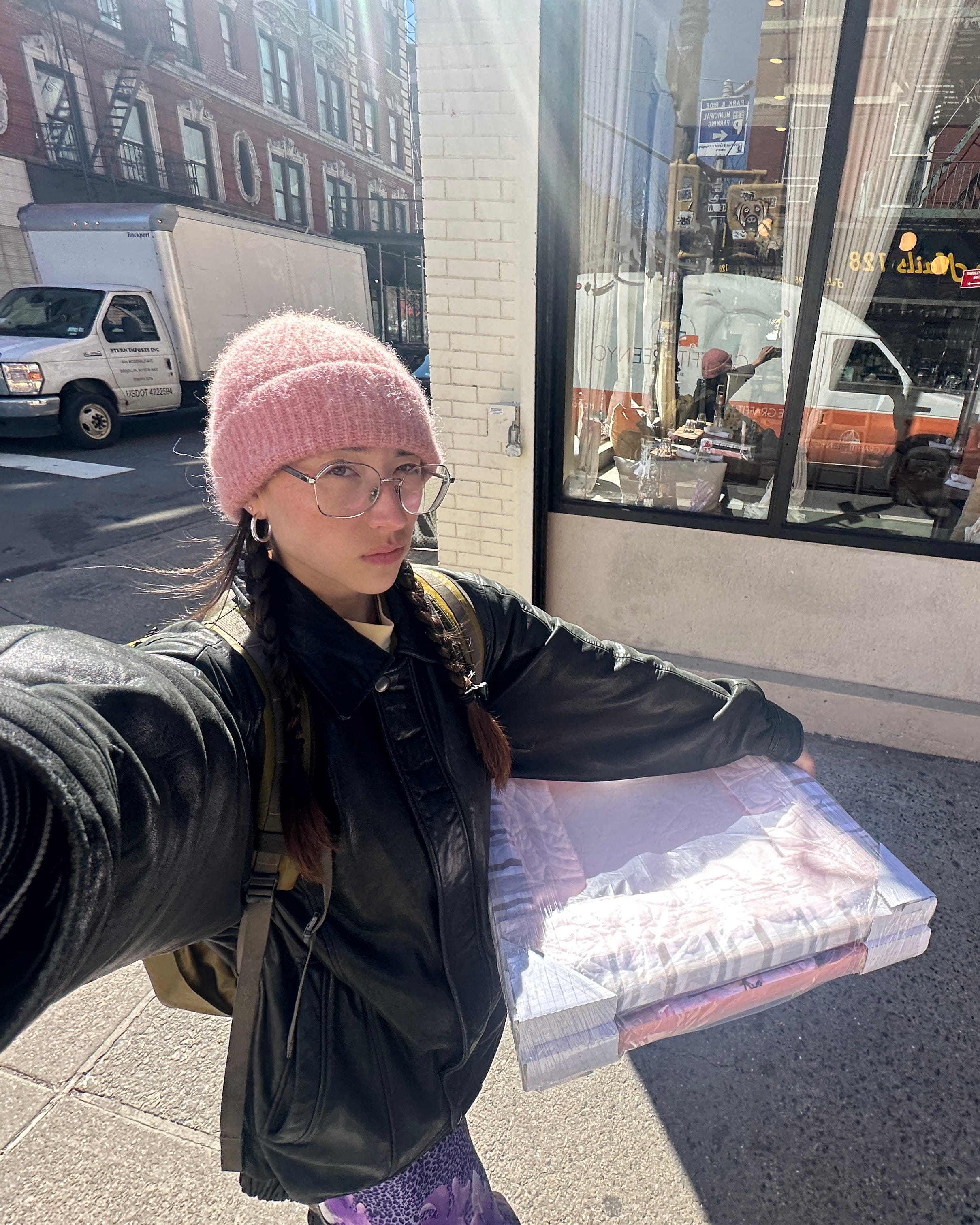
What do A.I. and a seven-year-old in a sequined costume have in common? Quite a lot, apparently. In “StarPower,” Maya Man’s new exhibition at bitforms, the New York–based artist draws a line between the rigid training of competitive dancers and the endless optimization of machine systems. At the center of the show is StarQuest, 2025, a computer-generated reality series that borrows its title from the real-life U.S. dance competition of the same name. Think Dance Moms—backstage pep talks, stage makeup, tears, and meltdowns—stretched across 111 scenes of uncanny unreality. Below, Man reflects on growing up in competitive dance, T.V. nostalgia, and the eerie overlap between childhood performance and machine intelligence.
You grew up as a competitive dancer. What’s the first memory that comes to mind when you think about that world?
Being backstage at a dance competition in Lancaster, Pennsylvania, trying to put on fake rhinestone eyelashes in a tiny, makeshift mirror. I can barely remember ever actually being on stage.


What about competitive dance culture stuck with you the most?
The psychology that it encourages. Trying to stretch yourself beyond your limits to touch perfection. I think about drilling routines in the studio, looping them over and over again while continually working to picture how I might appear on stage.
What did it teach you?
It taught me about friendship, discipline, and dedication. My coaches always reminded us that the real work happens in the studio before you get on stage. I still believe that in my practice now.
Why did you want to revisit that experience through A.I.?
There’s a lot of talk about training A.I. right now. I see a parallel between the technical details of that process and the way that dancers are trained in a company. Both are pushed to reach a kind of unattainable perfection. Both always inevitably fall short of flawlessness. That point of failure became compelling to me as I started making this piece.
“Does the knowledge that the show is fake matter if what you feel about the characters on screen feels the same as watching real reality TV?”
— Maya Man
What about video in particular?
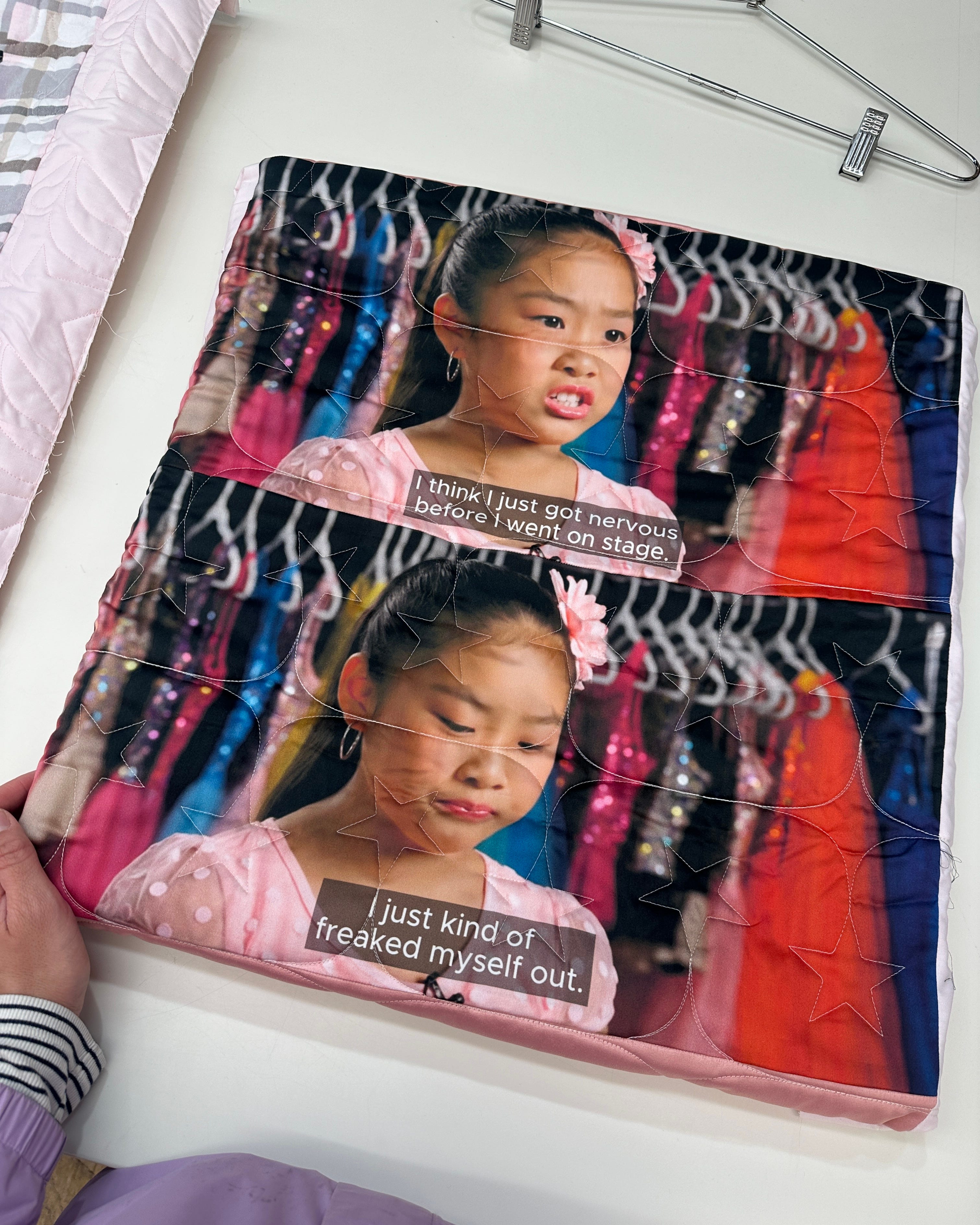
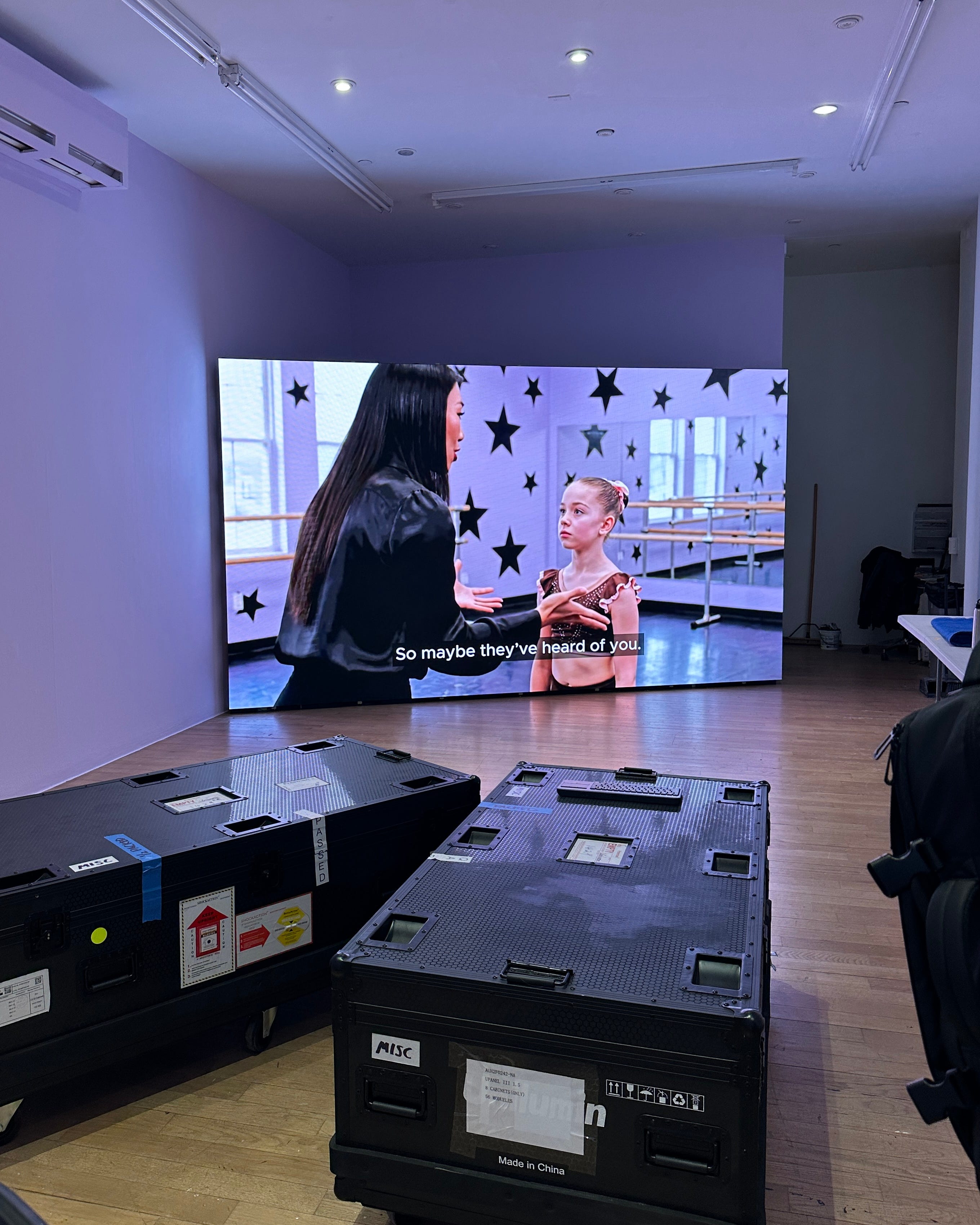
We’re at a really specific and special moment right now with A.I. video. It’s advanced quite far, to the point where I’ve had people watch StarQuest and not realize at first that it’s completely A.I.-generated. But there are also clear glitches that make it impossible to believe the shots are live action. I wanted the piece to oscillate between looking realistic and then looking suddenly, clearly inhuman and sometimes grotesque.
Confessionals in reality T.V. are supposed to be real, but we know they’re edited. Did that tension shape your inclusion of this format in the show?
In this entire show, and across most of my work, I’m playing with this idea of what’s real. Of course, reality television is highly staged but we still watch it with a suspension of disbelief because we want to be caught up in the drama.


How much is made up in your work?
All of the visuals and the music are completely fabricated. I’m curious about what it means to be affected by something that is overtly unreal. Does the knowledge that the show is fake matter if what you feel about the characters on screen feels the same as watching real reality TV?
Does the way these shows continue to circulate as content online shape how you thought about “StarPower”?
Yes, three edits that remix clips from StarQuest are featured at bitforms, each one playing on loop on an iPhone. Edits are a very powerful genre of content-creation online. They change minds, make people fall in love, turn audiences into fans.


Where do you see fan edits like this in the wild?
Dance Moms first aired in 2011, but it still has this looming, current cultural presence because clips from the show are continually reposted and remixed on TikTok.
Can you share a little about the prompts you used for your A.I. dancers?
The entire piece was created through language-based prompting. I never fed the model any visual content. The prompts need to be highly detailed to get the results I want. I sometimes used an L.L.M. to assist in writing them, because A.I. models know best how to communicate with other A.I. models.
What’s an example?
Here’s an excerpt from one prompt describing a dancer’s costume:
She wears a dance costume that has a soft, elegant look in a pale aqua blue color. The bodice is fitted and covered in delicate lace with subtle sparkle, accented by a floral applique detail at the neckline. The halter-style straps cross at the front for a graceful touch, while the attached skirt is made of lightweight chiffon that drapes in an asymmetrical cut, shorter in the front and flowing longer in the back. The look is completed with a coordinating aqua floral headpiece decorated with lace and embellishments, styled to match the costume. The dancer wears tan slip on jazz shoes.
Did the results ever surprise you?
I was surprised every single time. It’s a very black-box system and impossible to predict.