


Text and photos by HAILEY JOHNSON
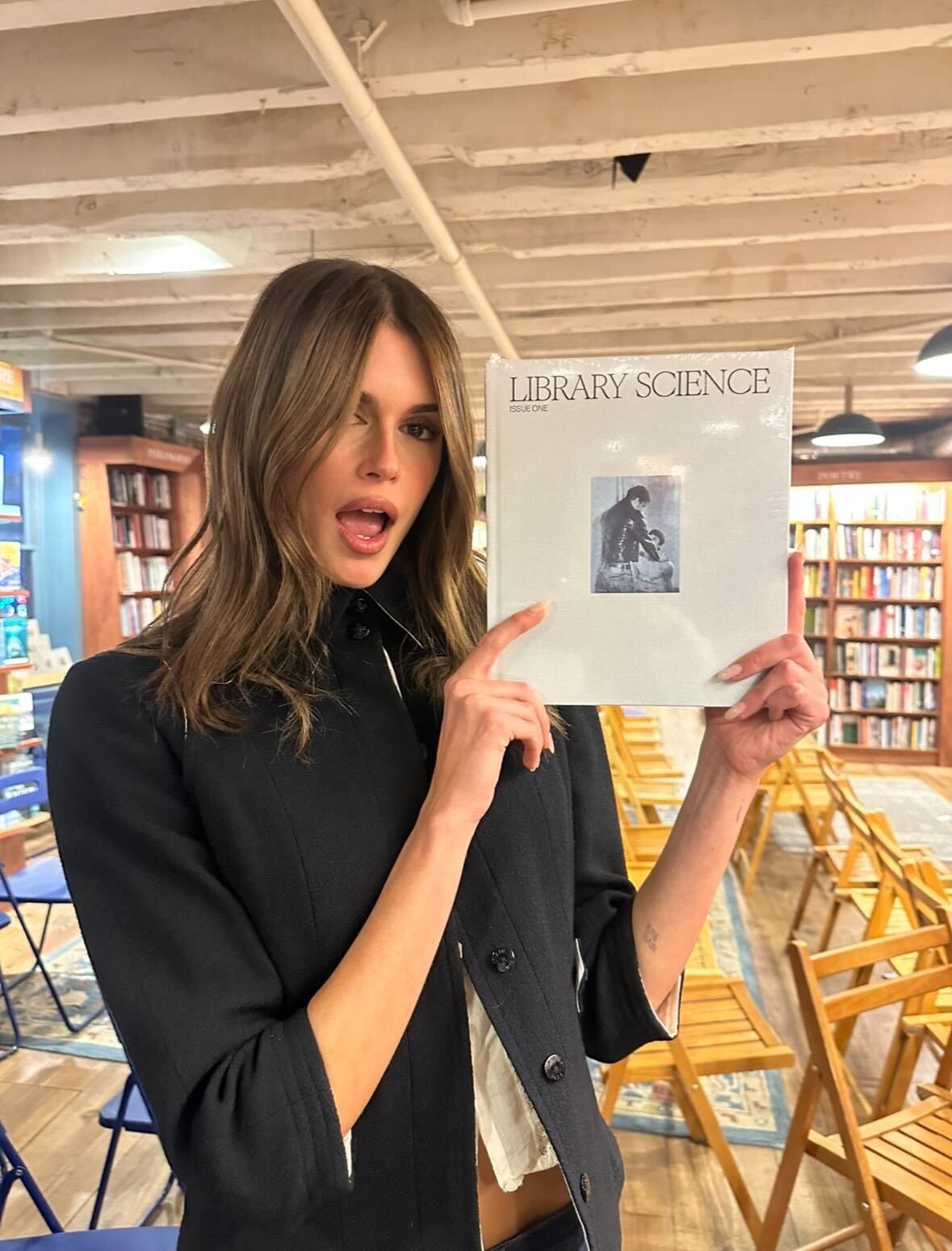
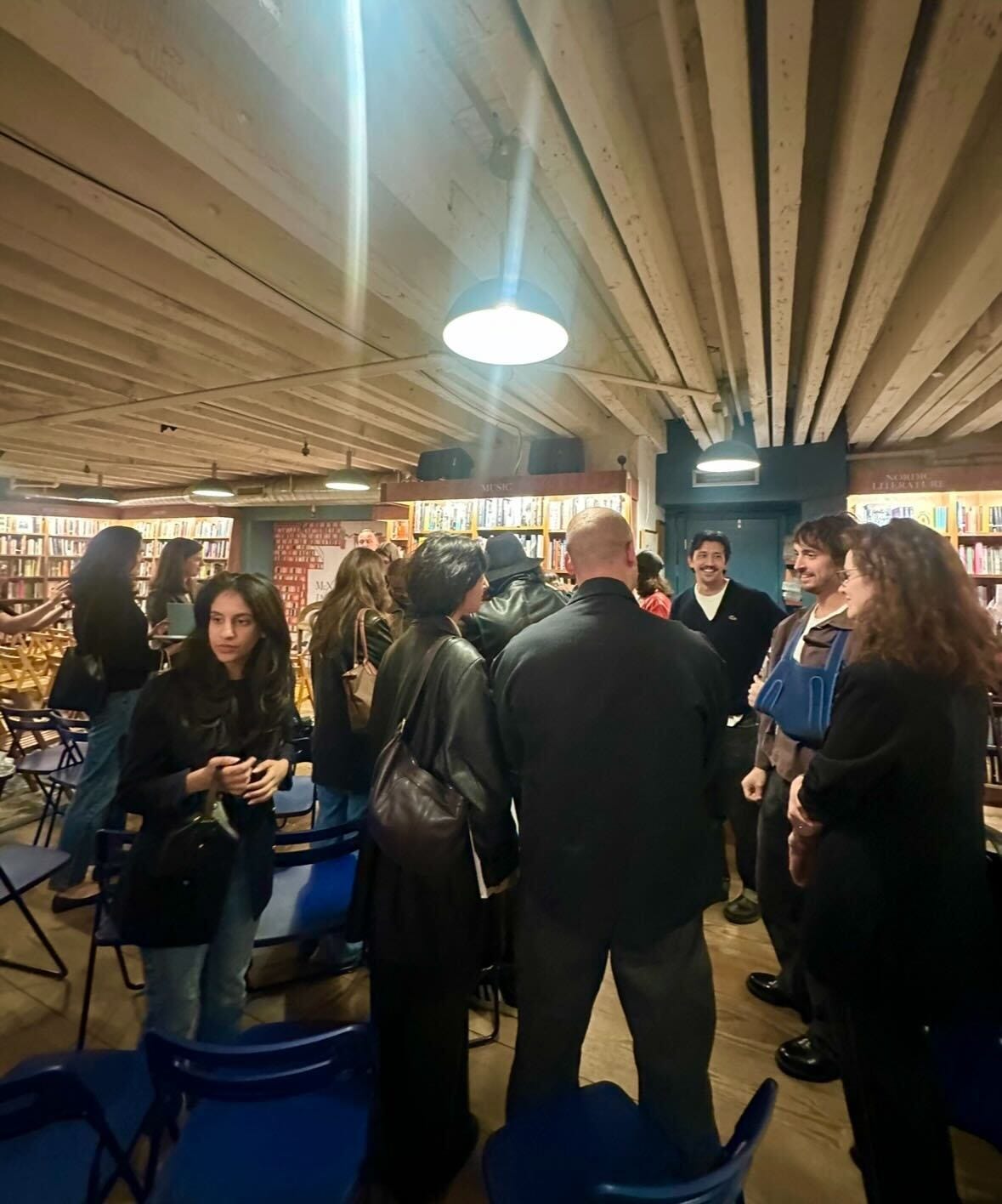
Upstairs, on the second-floor of McNally Jackson’s Seaport outpost, model and actress Kaia Gerber and writer Alyssa Reeder gather for the launch of their debut issue of Library Science. An eager crowd settles onto blue folding chairs and worn couches. Cindy Crawford, Jeremy O. Harris, and figures from the city’s literary scene fill the front row. On stage, the two editors are joined by the night’s moderator, Heavy Traffic magazine’s Patrick McGraw, all dressed in black.
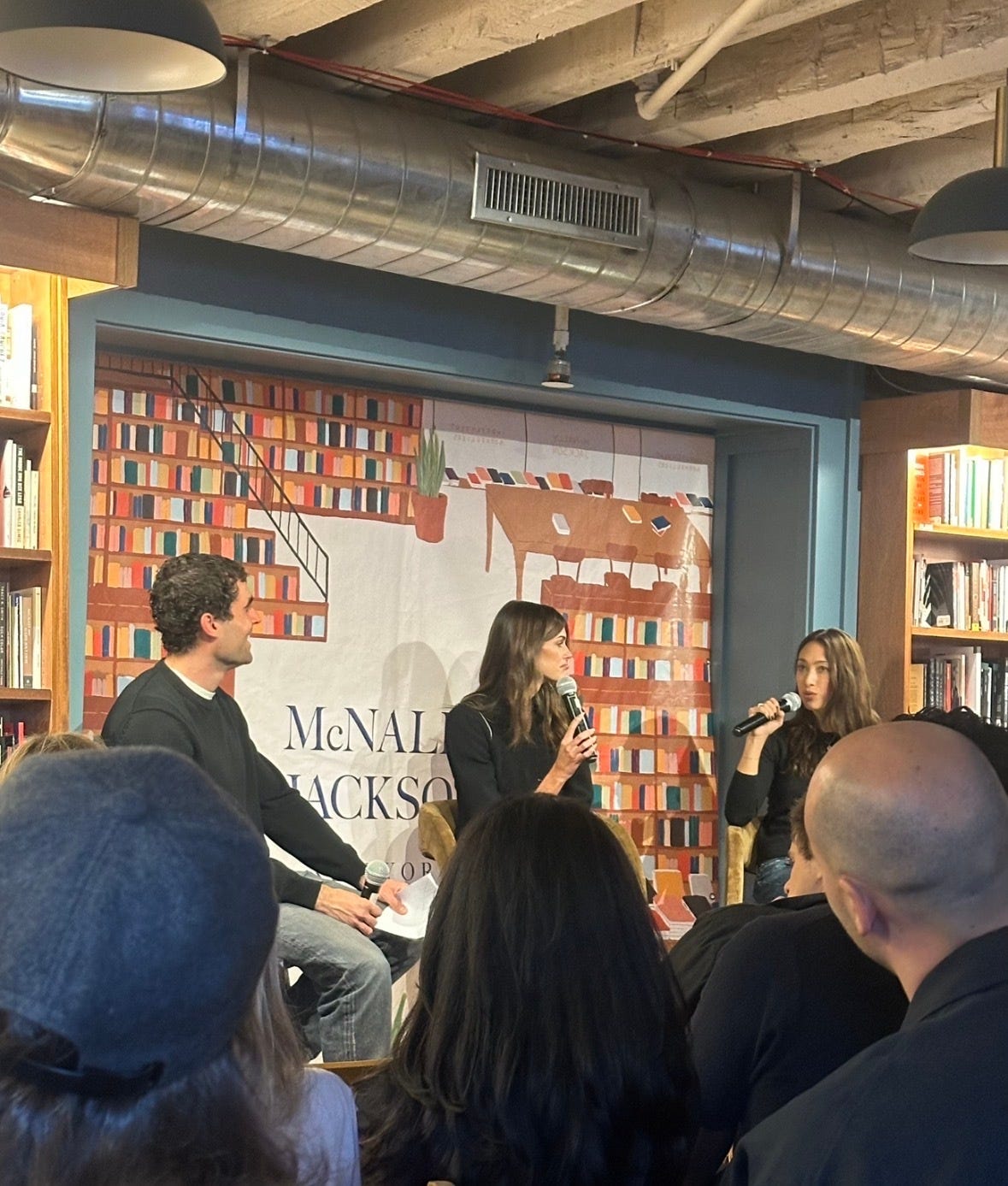
Part literary journal, part Internet artifact, the issue brings together short stories, essays, poetry, archival diaries, and online ephemera from writers, artists, and friends. It’s an extension of the popular book club of the same name that the two founded together in 2024. In the introduction, Gerber and Reeder frame the project as a two-way mirror: one side turned toward the Internet’s chaotic self-surveillance, the other toward literature’s long obsession with interiority. During the evening’s Q&A, Gerber speaks candidly about the tension at the heart of the project. Their goal isn’t to just replicate her and Reeder’s algorithms, but also to give context. “We’re just trying to print what’s happening to us,” Reeder says, and find a way “to bridge those two things without tipping into brainrot.”
Each issue of Library Science takes a meme—disposable by design—and asks what literature can do with it. For issue one, that clip is from a 2022 TikTok in which a daughter pranks her mother by claiming Jesus has been spotted in Ohio. The mother, on the verge of tears, asks her to send her the video. “Show me to me. Please, send it to me, Rachel,” she begs. The clip is tender, absurd, and impossible to forget.
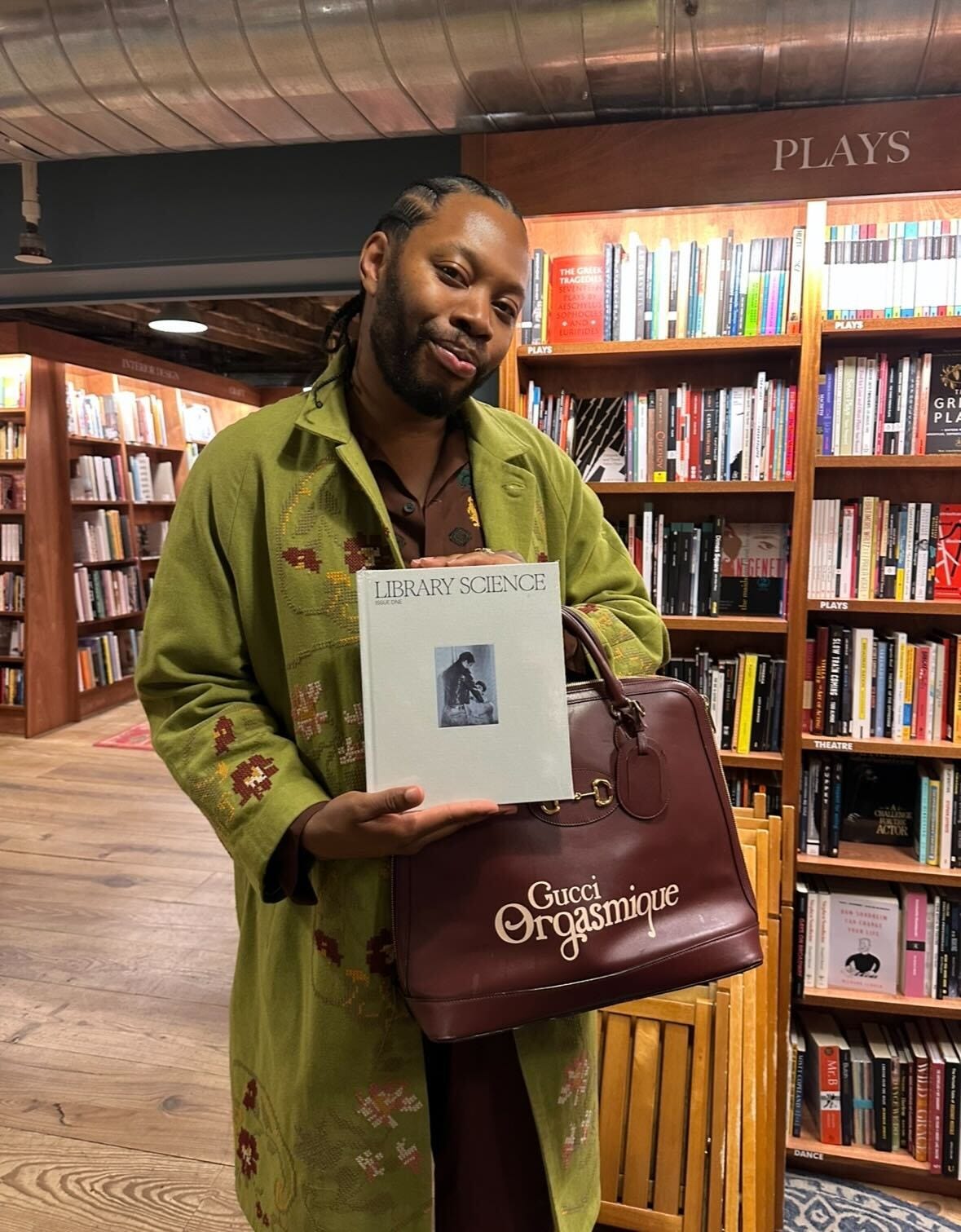
Throughout the evening, Gerber and Reeder lead us through the issue, which chronicles various topics: writer Stella Leoni’s notes on breakup anniversaries, a meditation on summer flings as told by writer and bookshop-owner Jonah Freud, poems on YouTube comment sections by Oona Soft Metal, and select entries from the diary of the late author Cookie Mueller. “We tried to choose things that are accessible,” Gerber explains. Each piece is only a few pages too. “Time is a luxury, and I feel like we don’t have that much anymore, so we chose literature that doesn’t need a lot of time to read,” she continues. In a nod to Reeder’s fondness for writing obituaries, the two editors wrote one for each other. In Gerber’s version, Reeder died on a Friday “from simply being over it.” In Reeder’s, Gerber passed on a Sunday from having too big of a heart.

For now, the book is available to order at librarysciene.net and wider availability will come at the end of May. As for issue two—neither of its editors know the theme yet. Each idea will get dumber, they agree, but the ethos stays put. “We want literature to be attainable,” Gerber shares. “It doesn’t have to be this distant, ‘pretentious’ thing.” She adds: “I genuinely think reading is sexy.”