



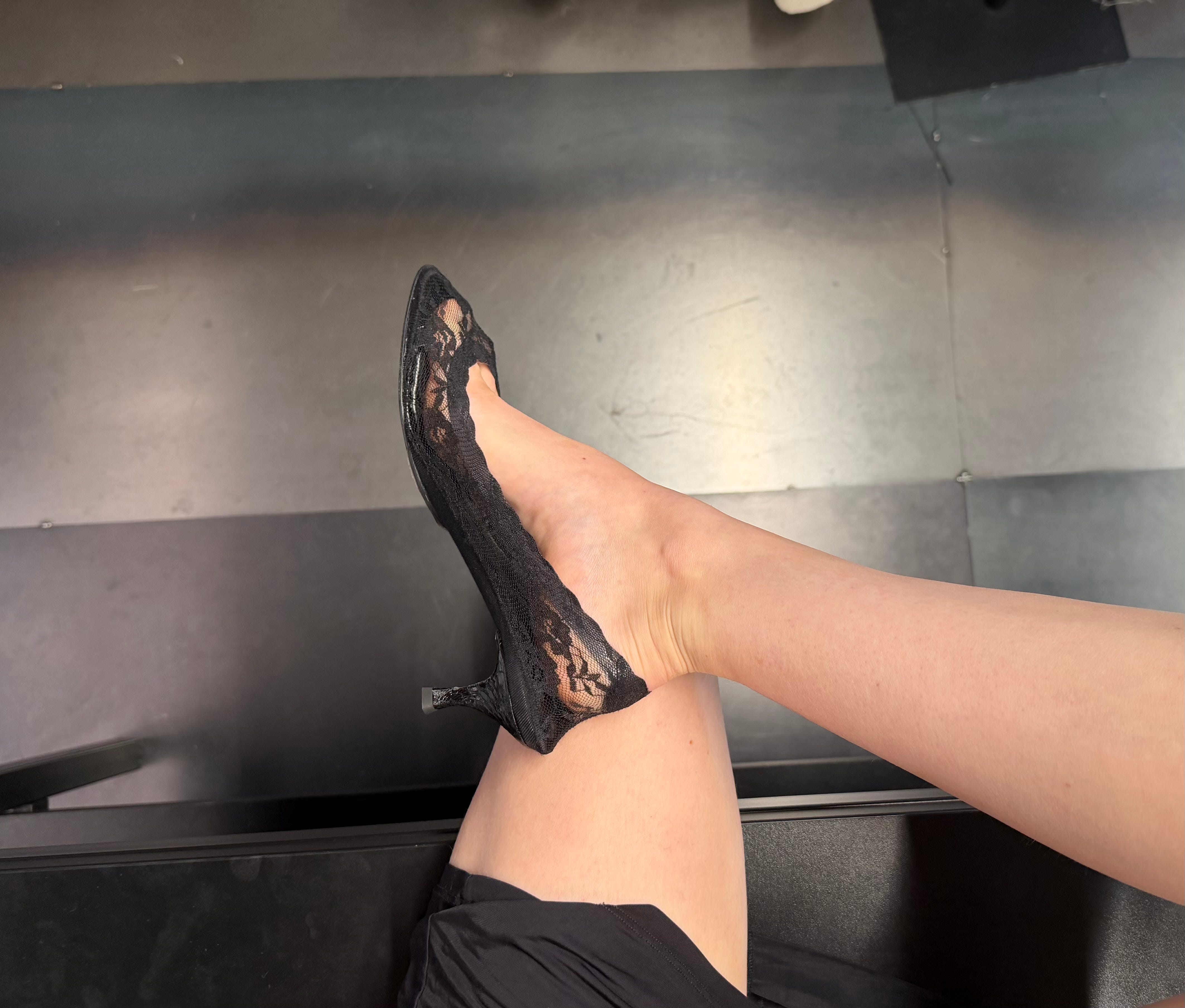
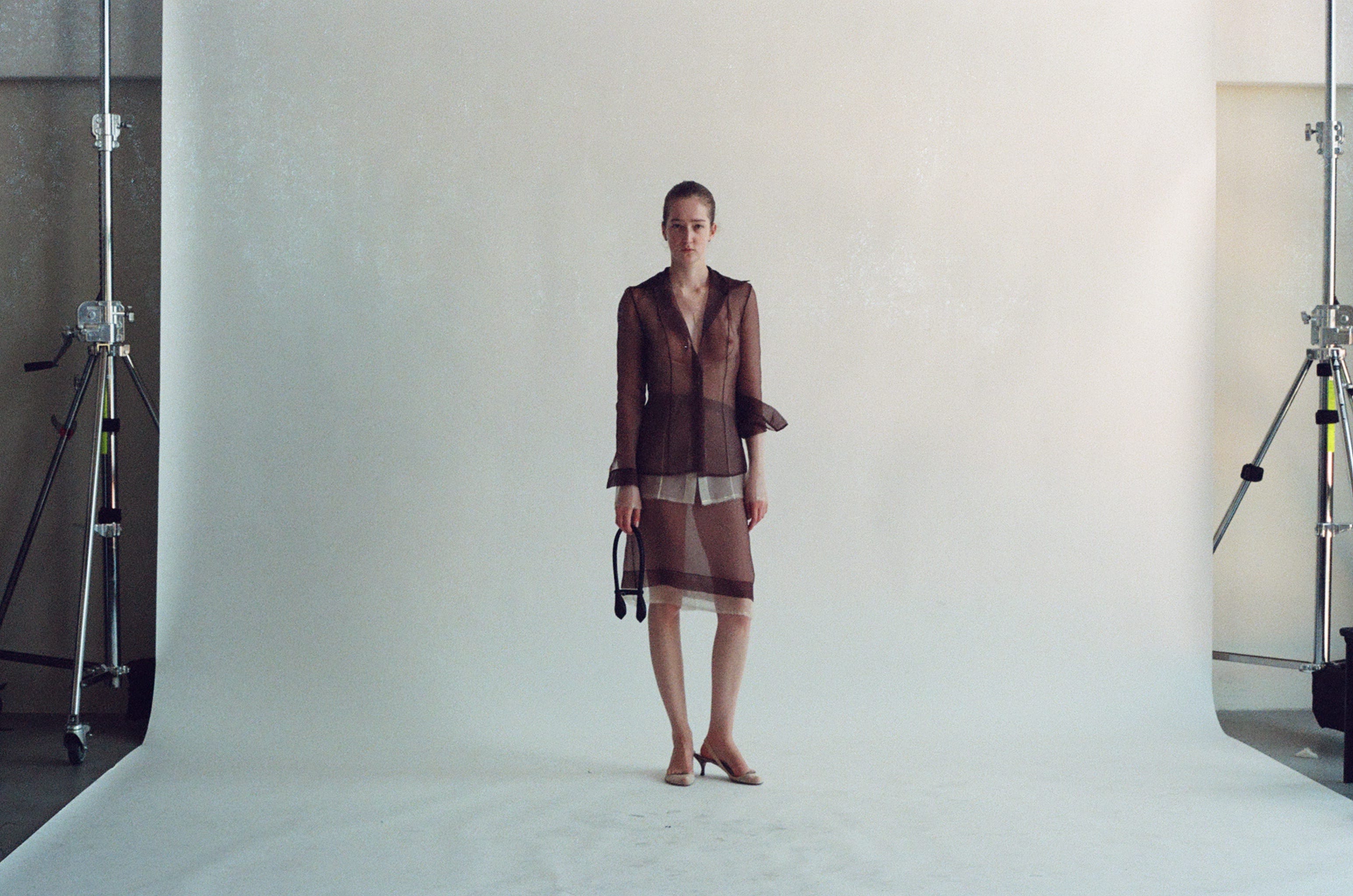
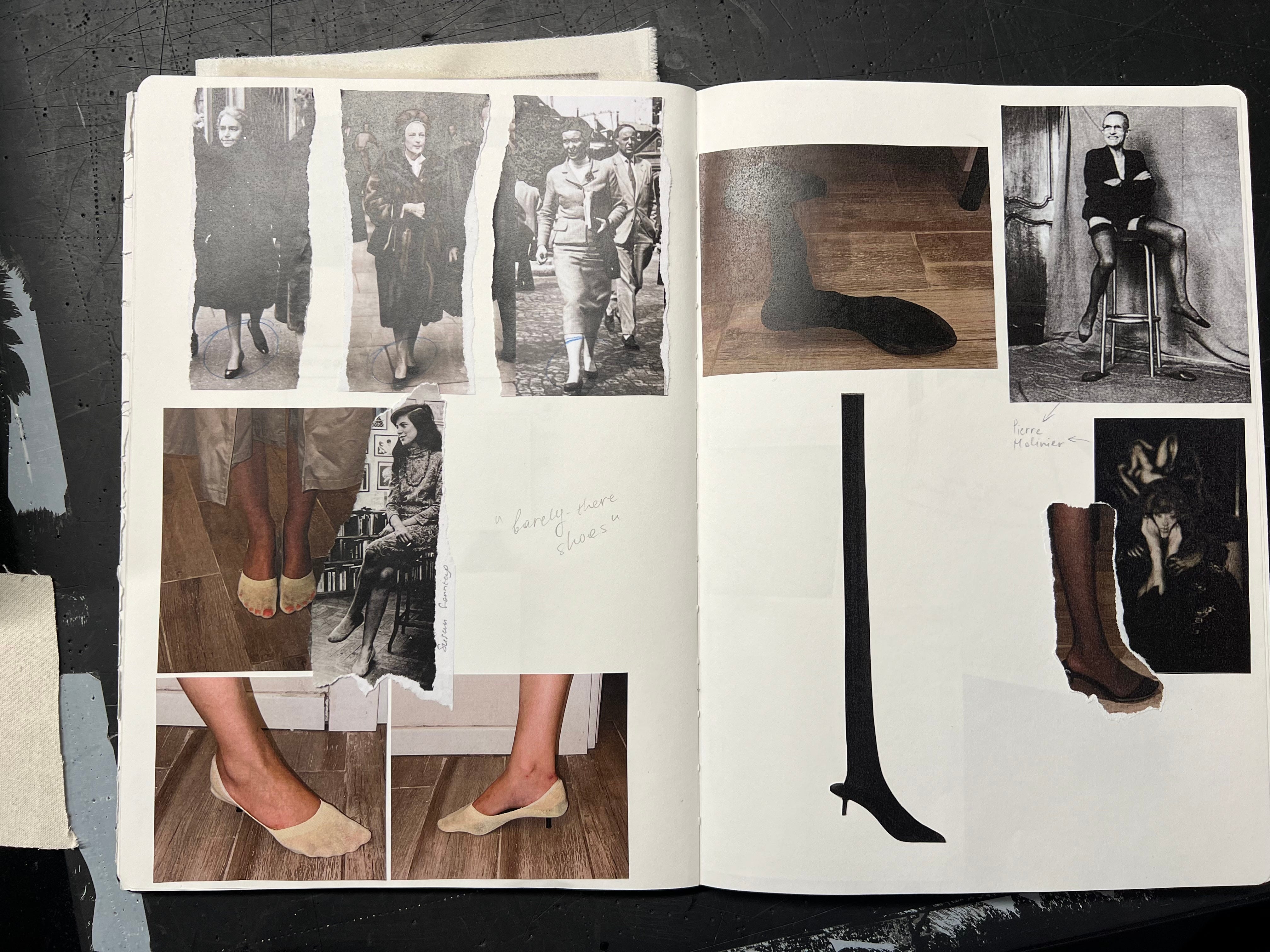
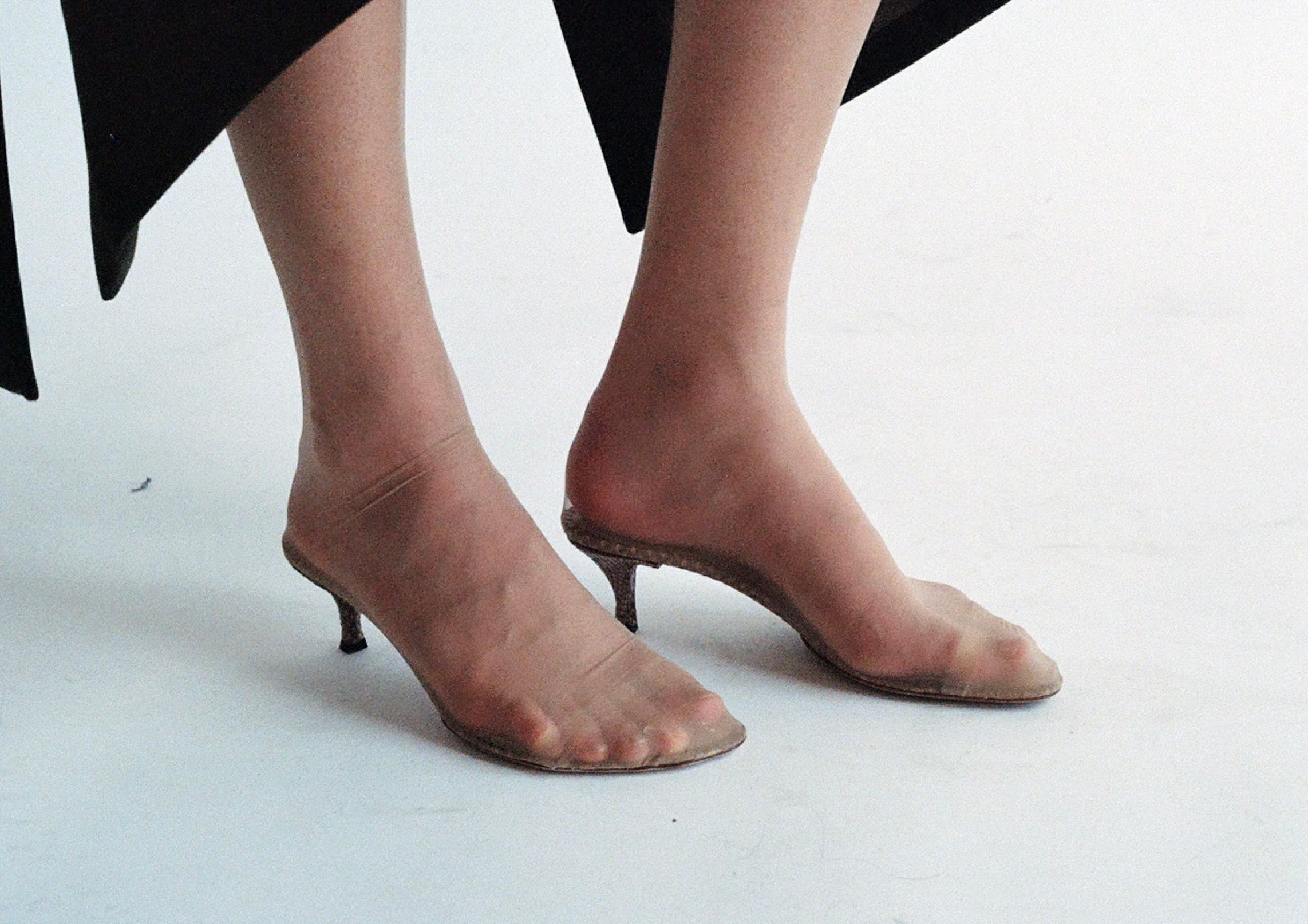
A whisper of fabric hugs the foot so delicately it looks less like a shoe and more like a second skin in Evelina Kryvopust’s designs. Ever since she began sharing snippets from her latest collection online, the 22-year-old has been ricocheting across explore pages and moodboards. Created as part of the Ukrainian designer’s thesis show for the Florence fashion university Polimoda, the idea began with a photograph of Susan Sontag at work, her feet in thin, almost invisible flats. We caught up with Kryvopust, who graduated earlier this week, to talk early obsessions, studio life, and what comes next.
Where did you grow up, and what was your world like there?
I grew up in Kyiv, Ukraine in a fairly large family that started to grow during my teenage years because I was the first child. Despite this, I was almost always quite detached from family matters and children, although I love them very much. Mostly I was in my room, in my own world full of films and books. I’ve always listened to a huge amount of music, and I used to make my own videos on YouTube. I made playlists for specific moods, kept enormous lists of reviews of the books I read, and wrote my own poems.
When did you first become interested in fashion, and when did you realize you wanted to become a designer?
I had a very academic education, and the school where I studied made us think that only serious work could be considered respectable. Because of this, I retreated from the idea of engaging in a creative profession. Although I painted all my life, danced professionally, sang, and played instruments, the main thing that always brought me back to creativity was the fact that I did not have a large circle of friends. I spent a lot of time in my head and in communication with myself. I was always as honest with myself as possible, and I understood that fashion is what I would like to do, but it took me a long time to return to this thought. I even studied journalism for 3 years at a university in Ukraine before the full-scale invasion began and I moved to Italy to study. Although I think about it now, I remember when in elementary school we were asked what our dream job was, and my answer was a fashion designer.

What’s your earliest memory of making something?
My vivid memory is of making collages between the ages of 5 and 12. At that time I lived in an apartment with my parents and grandparents. My grandmother always collected all the magazines from the mailboxes, knowing that in the evening I would cut them out and make collages. They are still preserved in her folders.
Do you usually start from films, images, or personal feelings when you design?
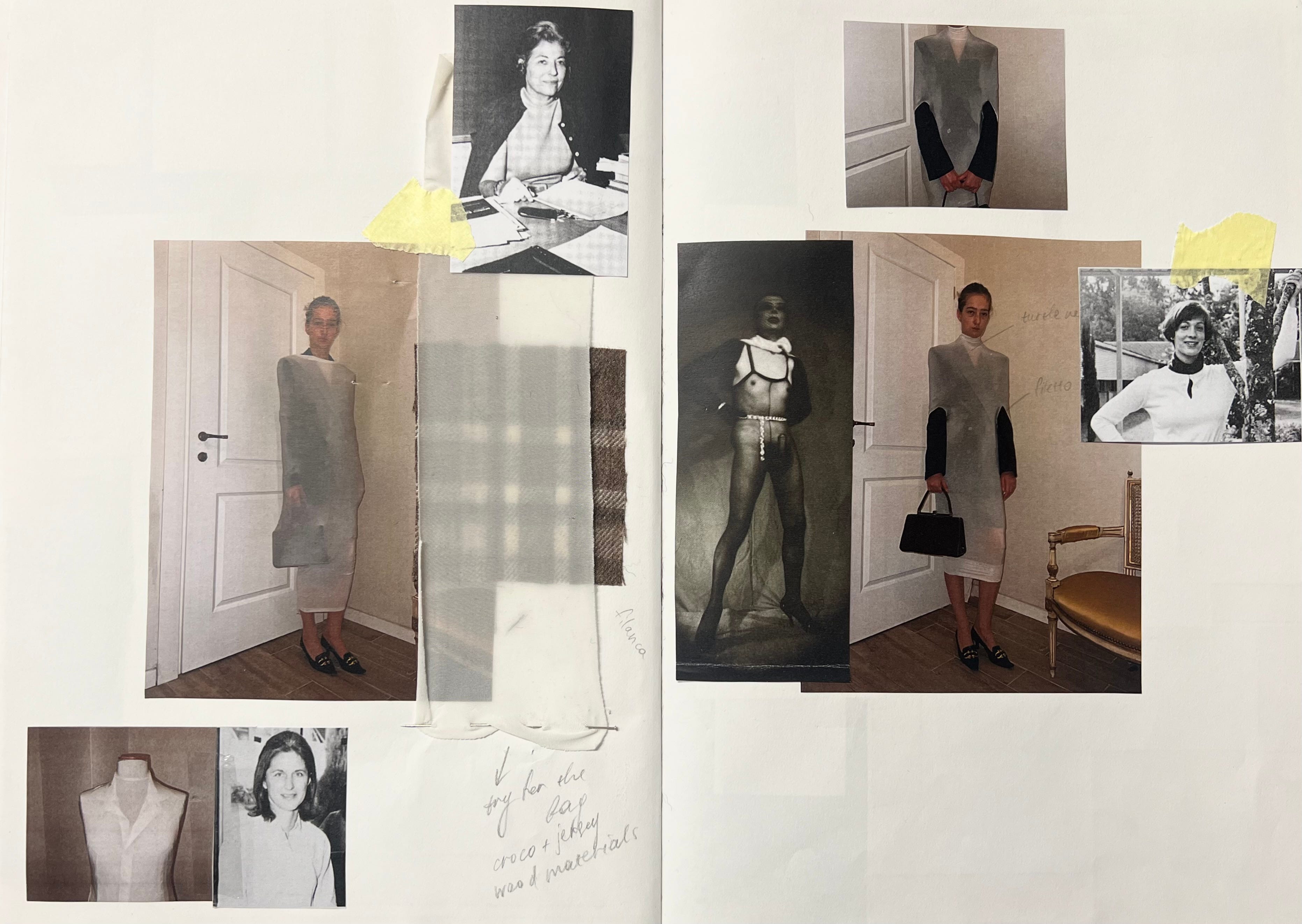
I start by trying things on myself. I try to move away from that to some extent and teach people how to make things without my physical presence in them, but I always have to see all my pieces on myself, from the first draping to the final pieces.
Are there any designers or artists you’re really inspired by right now?
Oh yes, I’m absolutely obsessed with Colin Benders and dream about hearing him live. For me, his music is a pure, mastered art. And then Florentina Holzinger, for me she’s an artist of the year.
What was the process of developing your shoe prototype?
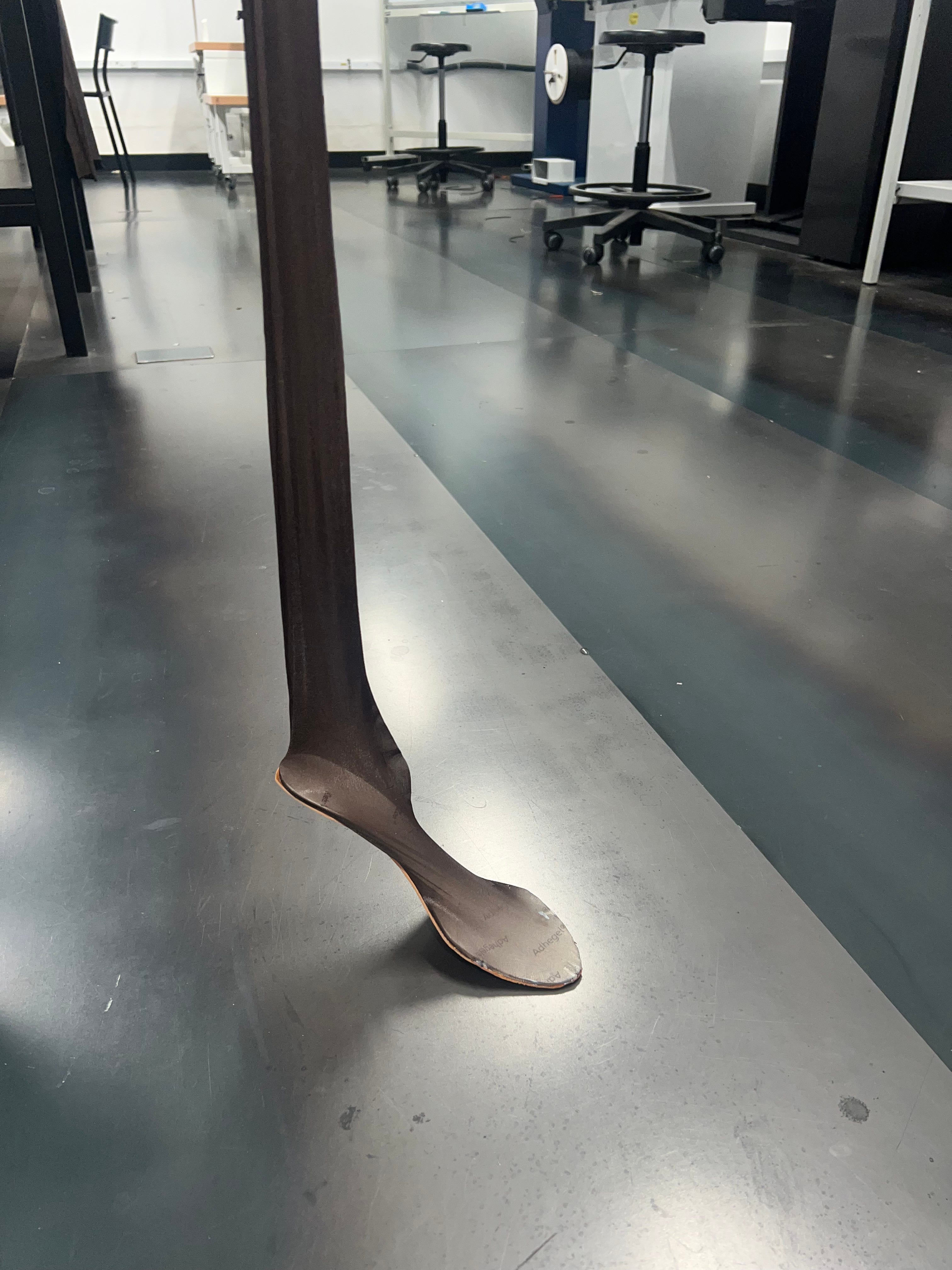
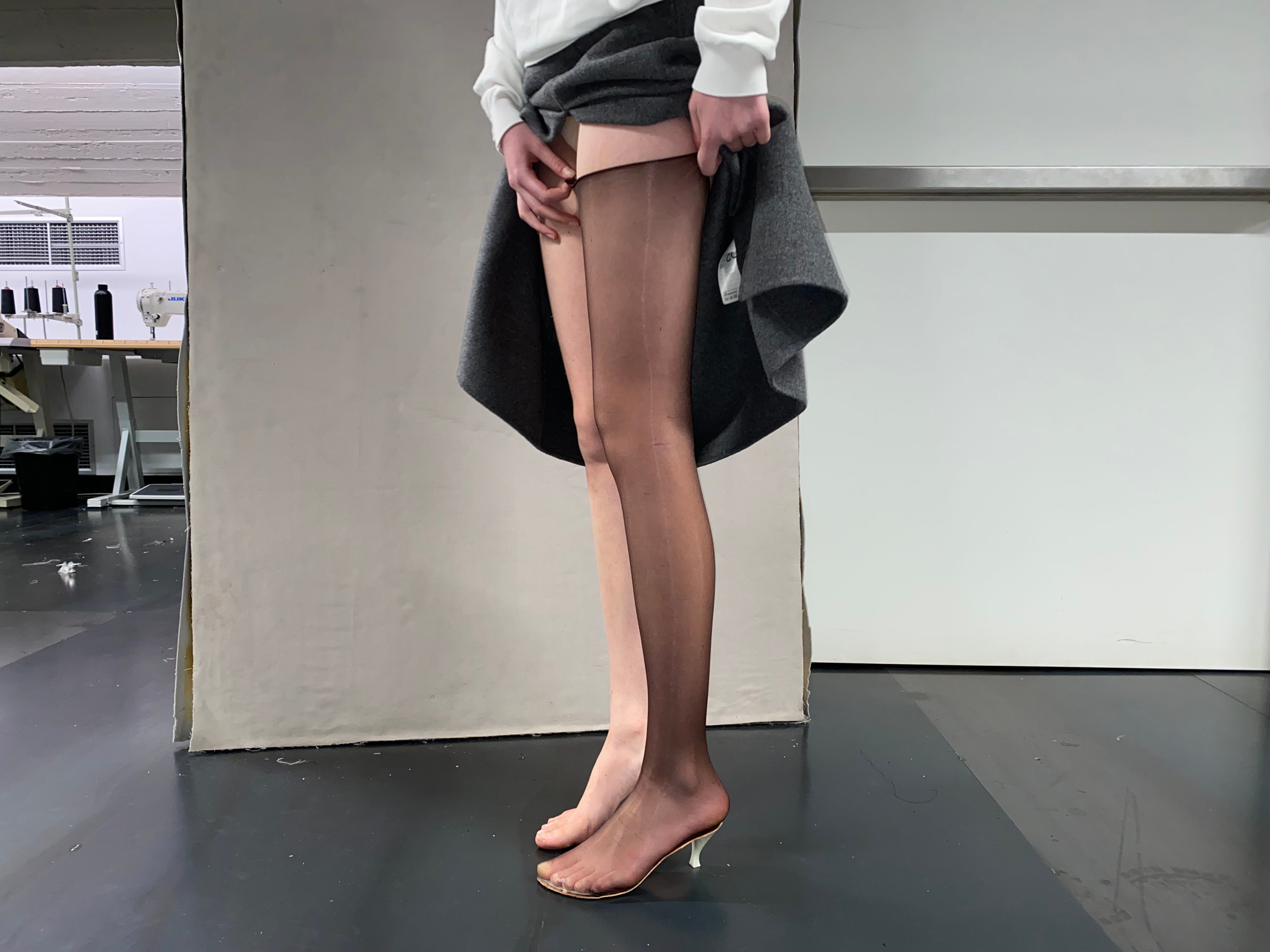
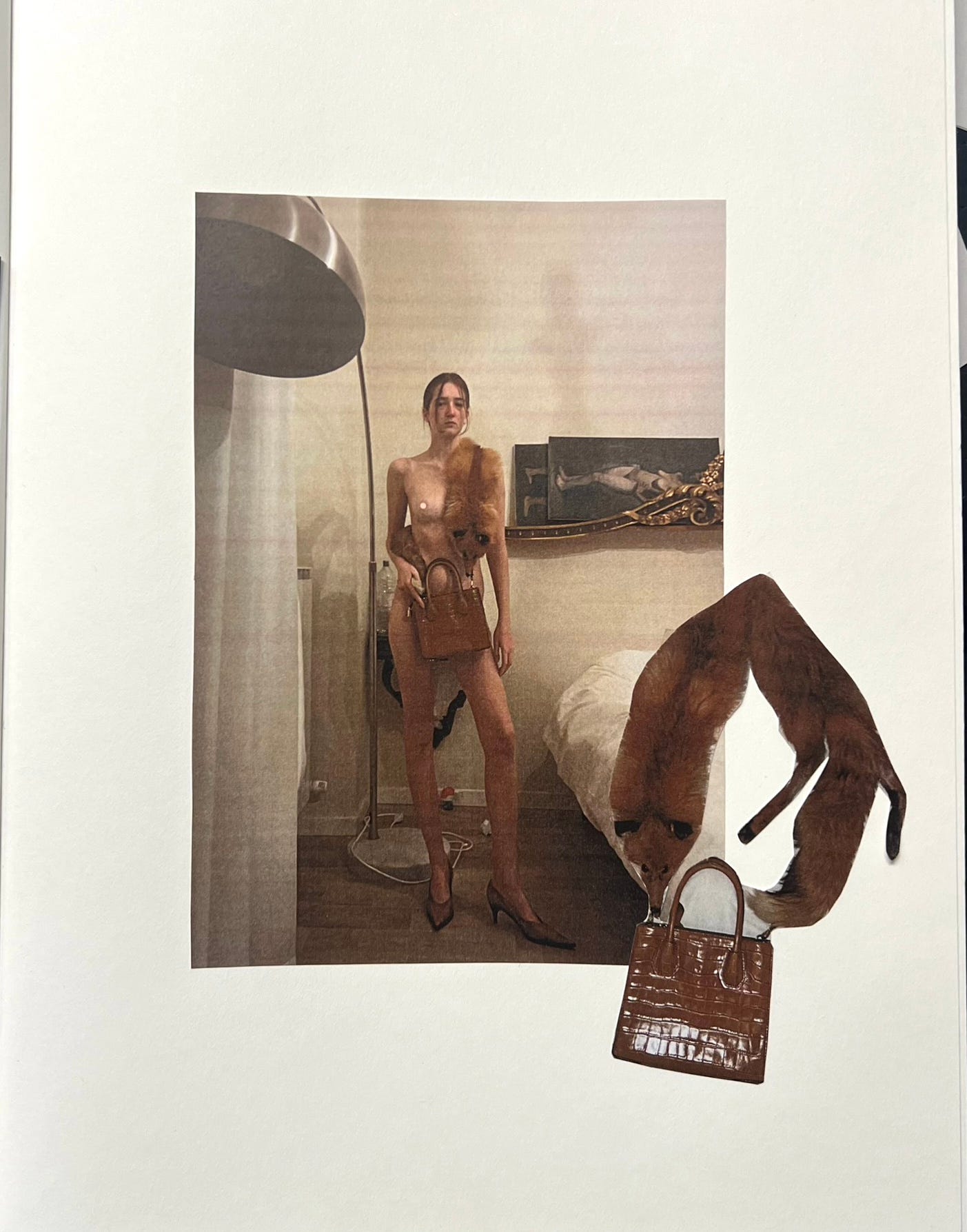
The idea of creating this particular shoe was inspired by a photo of Susan Sontag, where she talks to her son in her office. I noticed the shoes she was wearing in that photo, and they were very thin ballerina flats that literally followed the shape of her foot. I started doing more research on different women who worked in the intellectual field, journalists and writers, and I noticed that a lot of them wore shoes that were very close to anatomical ones. From that moment on, I started collecting various vintage and small socks that I just tried on myself, saw how they looked and how they fit. The person who was involved in actually creating the shoes and putting all the pieces together is this man named Nicolo in Naples. In 2 weeks he managed to make six pairs of shoes, which required very painstaking work because they are all made of quite thin materials like lace, nylon pantyhose, and socks. He did an almost unreal job. I took a photo with a silicone variation of the sock where I simply attached the heel with glue, and posted the photo to Instagram. In a day I had 100,000 views.


How would you describe your studio life while working on this collection—what does a typical day actually look like?
Usually, I’m a person who finds it quite difficult to get up very early, so I would go in around 10 a.m., have breakfast, and start working on my things. It’s very different every day. Maybe I’m working on the sketch, maybe I’m working on pattern-making. Usually, I spend most of my time on pattern-making and fitting sessions. I was always at the university’s studio until it closes at 8 p.m.
What was the most intense or stressful moment during your graduation collection development?
I worked in Italy where I had to constantly stay in contact with different suppliers and companies that were involved. Every day, I had to call everyone to ask how they were doing, then find out if someone had forgotten something, lost something, didn’t have time to finish it, and all the deadlines were constantly being pushed. I’m used to the fact that in Ukraine it’s possible to solve any problem as quickly and easily as possible, while in Italy somehow any small problem turned into a gigantic one.
Now that you’re graduating, what comes next for you—what are you hoping to do after Polimoda?
I’m looking for an internship. I am open to different offers and open to moving, so I am currently applying to different companies.

Love!!!