


Granny clothes, childhood photographs, old magazines, dog-eye views: Central Saint Martins’ latest undergraduate class found inspiration everywhere except the obvious places. Last month, their showcase in London resembled a memory box cracked open and emptied onto the runway, full of private references that somehow felt instantly familiar. Chi Wei transformed the patterns of her grandmother’s clothes into designs adorned with colorful beading and childlike bows. Polina Kadilnikova created industrial looks from photographs of her Ukrainian childhood interrupted by war.
Other standouts wove stories of their own, from Dalston market stalls to Arab interiors to family snapshots, into garments made of all kinds of materials, from silk chiffon to ceramic and steel. One month out, and just getting a hold of their summer schedules, six of the recent graduates take us behind the scenes and give us a peek of what’s to come.

What was the starting point for your graduate collection?
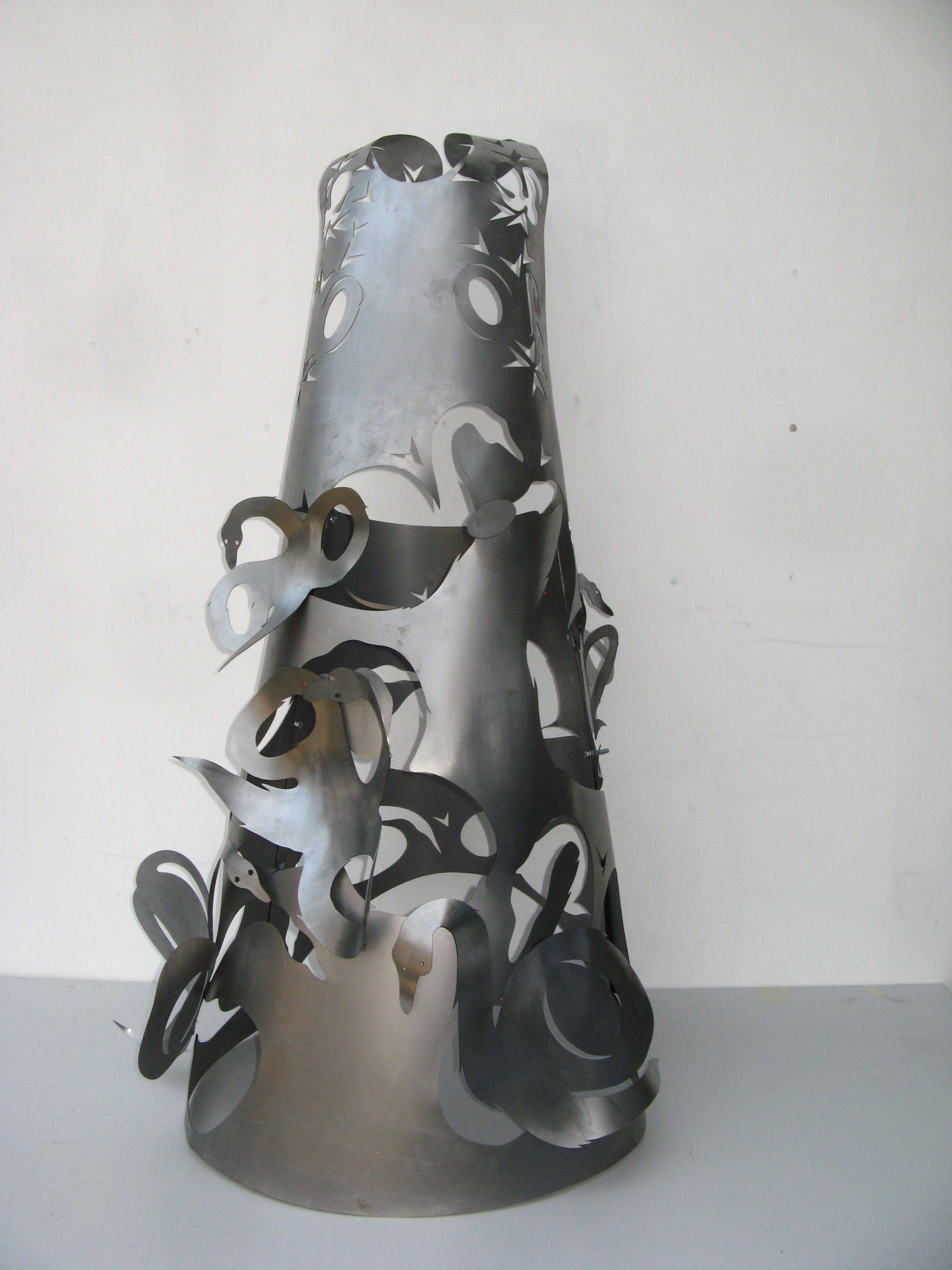
I wanted to extend a memory of a place that no longer exists by talking about the war in Ukraine and what it means to lose your home to war and occupation. My starting point was the question: If you had to relocate and leave everything behind, would your personality survive?
Which piece is the heart of the collection?
The swan metal dress. It is something I planned to do from the very beginning, but it only came to life within the last week of the year. I used steel to allude to war through materiality, but I’ve also always felt a deep connection to metal work. The process of making it feels very meditative. Some work has a better chance to live if you give it time.
How have you been spending your summer since graduating?
I’ve been walking around a lot. Summer is the perfect occasion for walks with no destinations or plans.
Describe the fashion scene in London right now.
Young and free.
One thing every aspiring fashion student should know?
It’s nice to feel lost. When you achieve all of your goals, there’s always something after that you won’t be prepared for. It’s a privilege to be able to experiment with your work and figure out who you are while you’re still a student.
Prakarti Agarwal, 23
What was the starting point for your graduate collection?
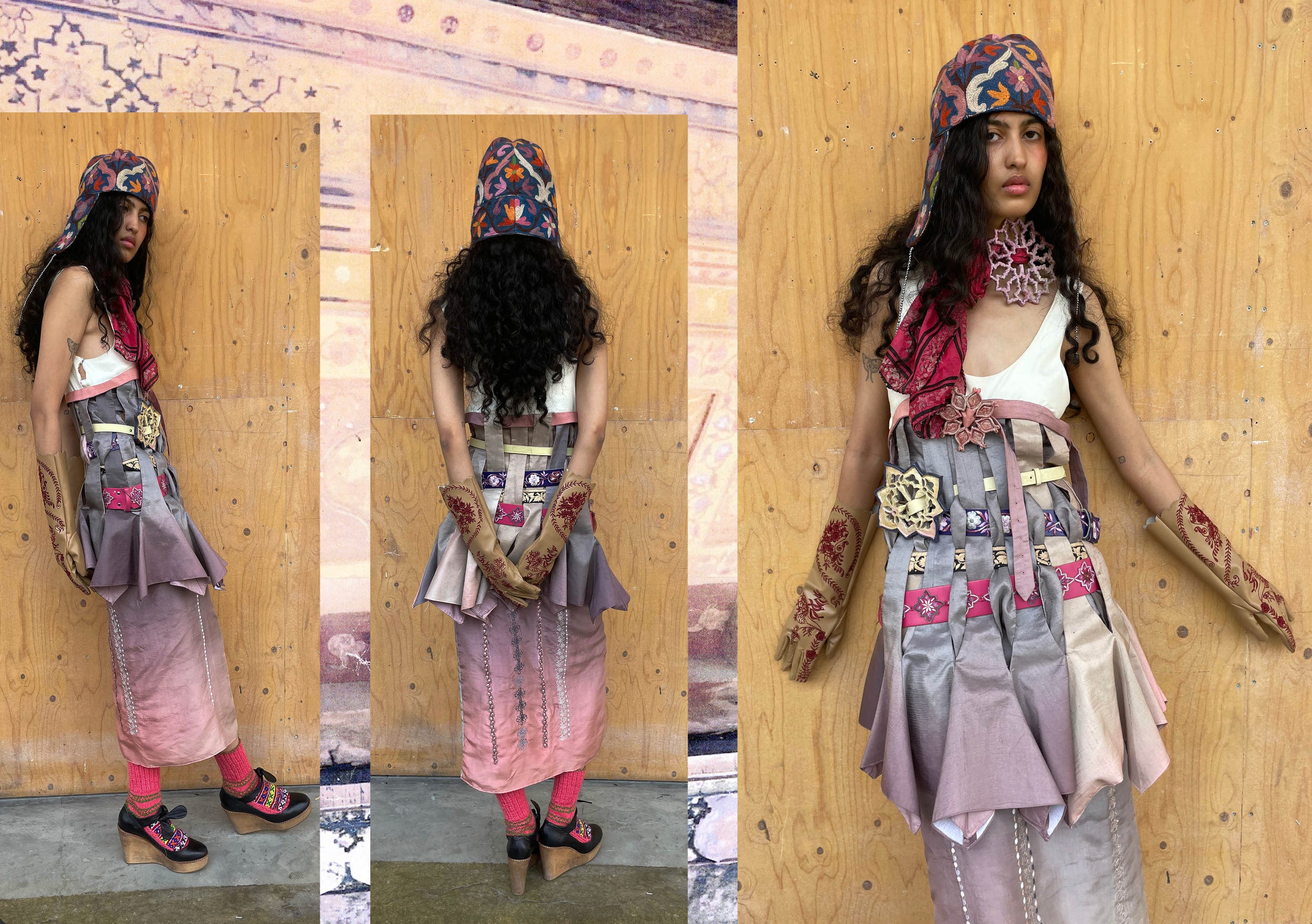
While I was doing an internship in India I took photographs of everyday scenes. It was the first time I had spent an extended period there. Rather than capturing surface-level observations, I found myself documenting quieter, more meaningful interactions. When reflecting on the trip afterwards, I realized I had created a collection of photographs that felt connected. Together, they told a story that I wanted to bring to life through this project.
Which piece is the heart of the collection?
Look two: It features a series of ceramic belt-buckle pieces that I hand-sculpted and incorporated into the garment. I wanted to engineer it so that the ceramic pieces became an integral part of the garment. They are woven directly into the dress, allowing the ceramics and textile to work together as one piece. It was inspired by photographs I took of beautiful buildings in India, and it pushed me to explore how I could translate something abstract and architectural into a wearable garment.
Do you have any overarching influences that surface again and again?
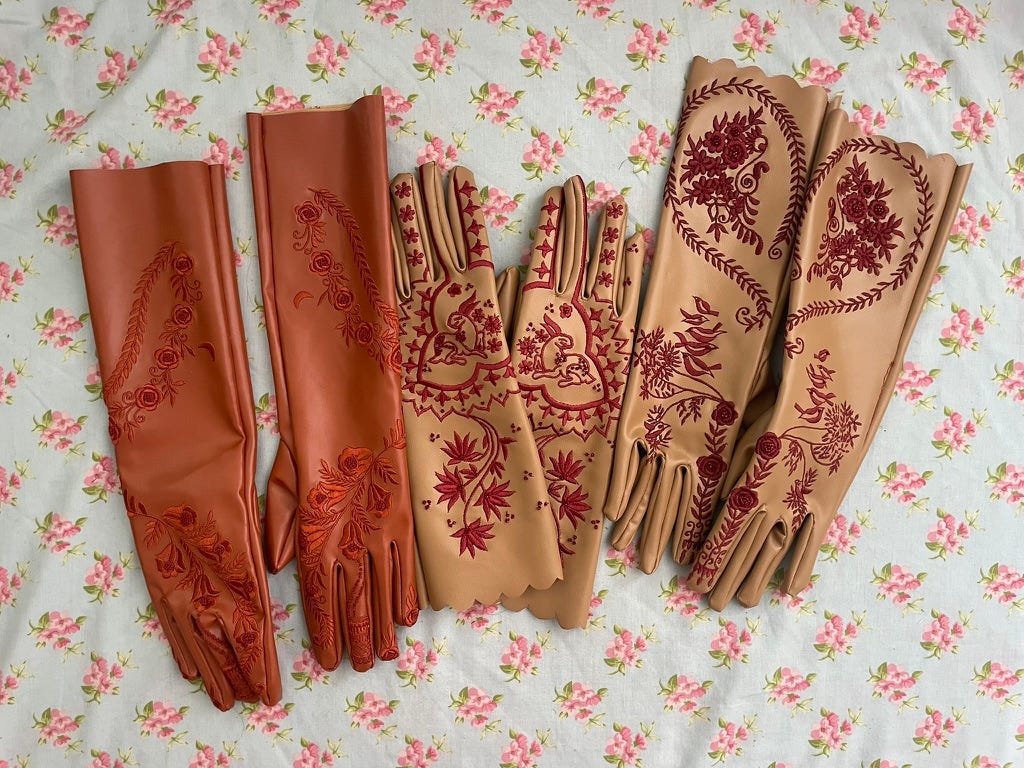
I have a large archive of film photographs from when my mum was around my age. They carry a sense of femininity defined by freedom, carelessness, and an effortless energy—qualities I wanted to capture in the person I imagine wearing my clothes. I reinterpreted these influences through my own perspective and design language so the garments feel lived-in, contemporary, and personal, rather than simply nostalgic.
Do you have a favorite designer brand?
Chloé—probably Spring/Summer 2000 or 2002, and also Fall/Winter 2026.
One thing every aspiring fashion student should know?
Trust your own perspective. The more personal your work is, the more authentic it becomes.
Harley Angrabeit, 24
What was the starting point for your graduate collection?
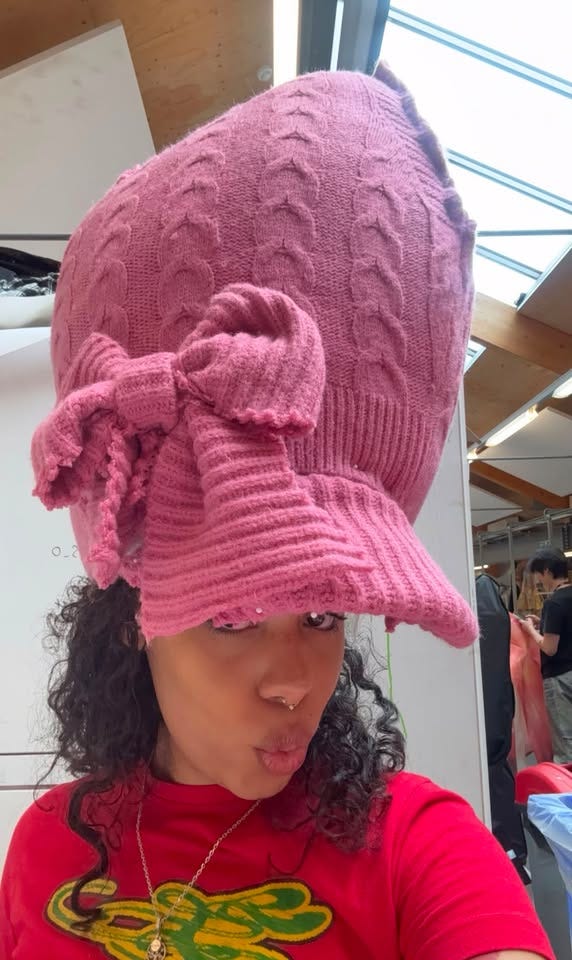
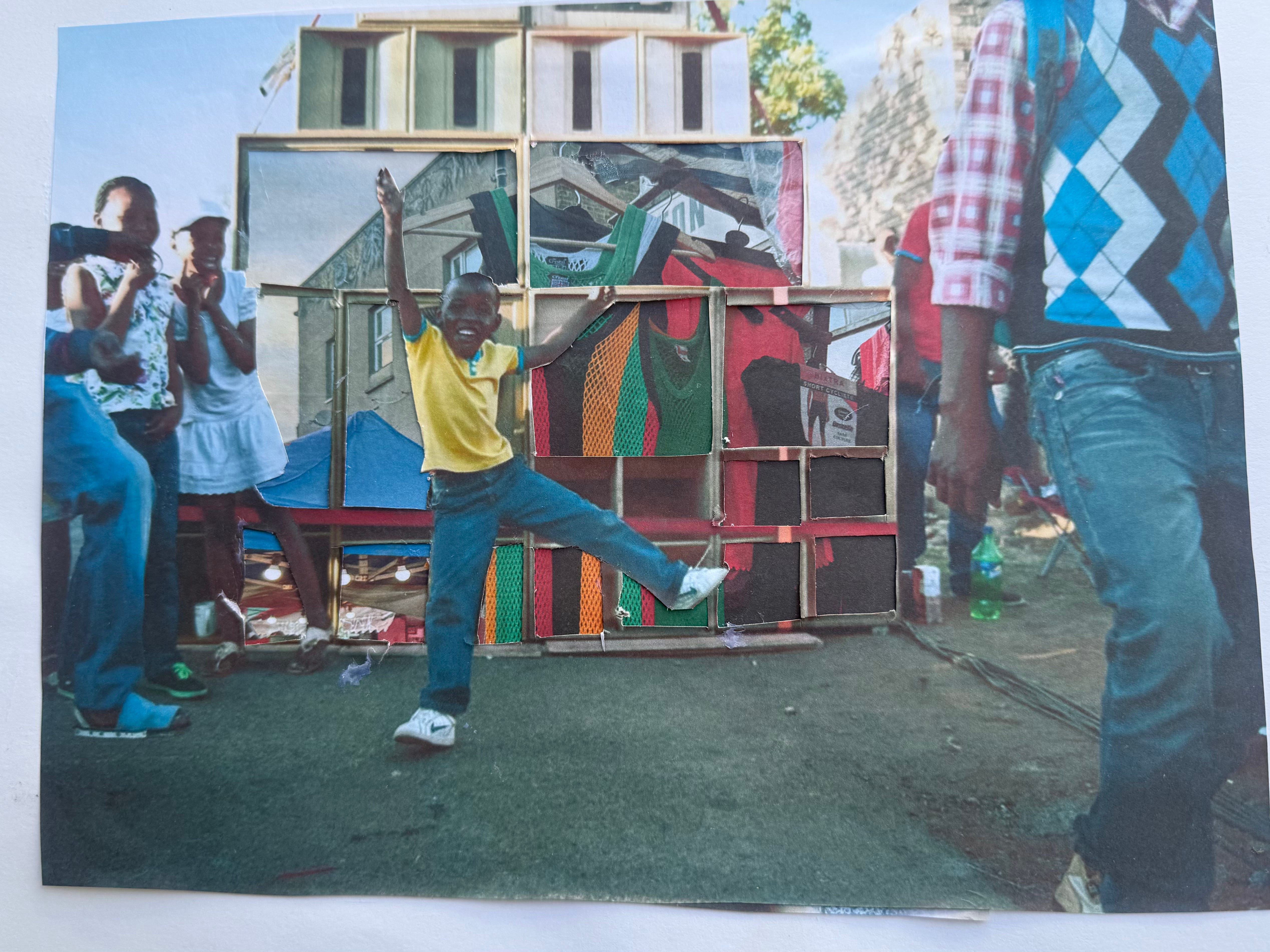
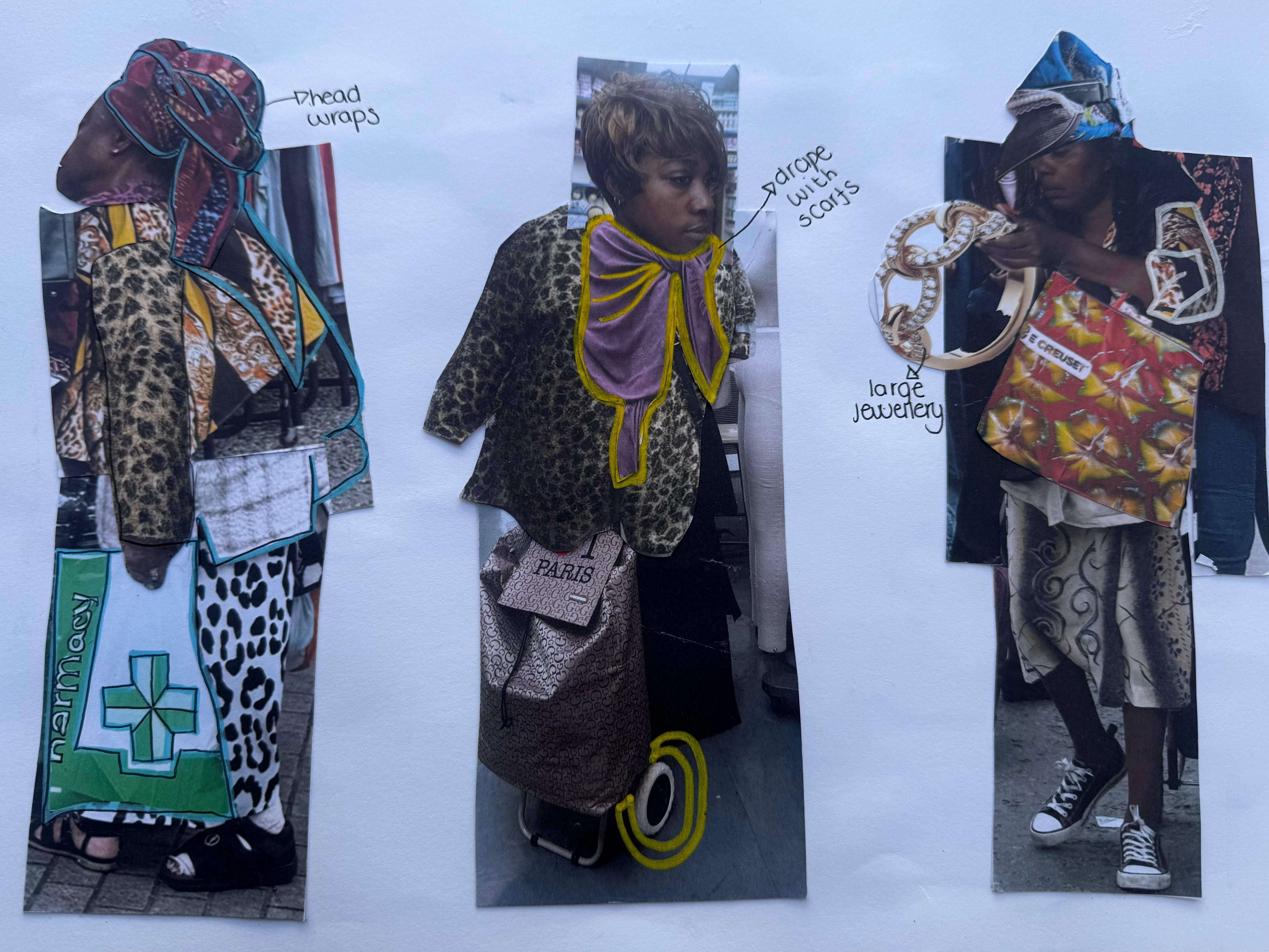
Simply stepping outside my front door. Everyday moments that make up life in Dalston: walking to Ridley Road Market, listening to music, eating Caribbean food, shopping for clothes, makeup, hair products, and bags. I photographed colors, textures, market stalls, and conversations that I found interesting, which inspired my silhouettes, material choices, and styling.
Do you have any overarching influences that surface again and again?
I’ve traveled to Jamaica to visit my family, and the colors, energy, and confidence there have shaped the way I see fashion. There’s a cultural pull that I always come back to. Jamaica has taught me to embrace boldness, to be audacious, raw, and unapologetic. That spirit runs through everything I create, whether it’s the silhouettes, styling, or attitude. Even when a collection isn’t directly inspired by Jamaica, those memories and that mindset are always there in the background. It’s less about recreating what I saw and more about capturing the confidence, resilience, and vibrancy that I’ve experienced throughout my life.
What is your memory of when you first got into fashion?
My first real expression through fashion came after I was expelled from high school. I was a depressed teenager, isolated in my bedroom with very little connection to the outside world. My phone became my window into different worlds, where I discovered new music, fashion, and creative communities that made me feel understood. I began cutting up my clothes, styling outfits, and teaching myself how to design. With nowhere to go and nothing to do, I poured everything into creating an imaginary version of the life I wanted to live and the person I wanted to become.
What made you want to pursue fashion as a career?
Fashion became an escape, a form of self-expression, and a way to imagine a future that felt bigger than the room I was confined to. What began as a way of coping with loneliness eventually became my purpose. Through making clothes and music, I realized I could build a world of my own, and that world is what ultimately led me to pursue fashion as a career.
How have you been spending your summer since graduating?
I’ve been back in the music studio, shooting once a week, and lending my graduate collection for last-minute style pulls, seeing the pieces go beyond the runway and become part of other people’s creative visions. I’m also working on the next steps for my brand, ParisN’London. A typical day is honestly a mix of designing, creating, meetings, shoots, studio sessions, and problem-solving, and of course a glass of wine at the end of it all. It’s busy, but I love that every day looks different and that I’m constantly building something across fashion and music.
Qinnan Li, 26
What was the starting point for your graduate collection?
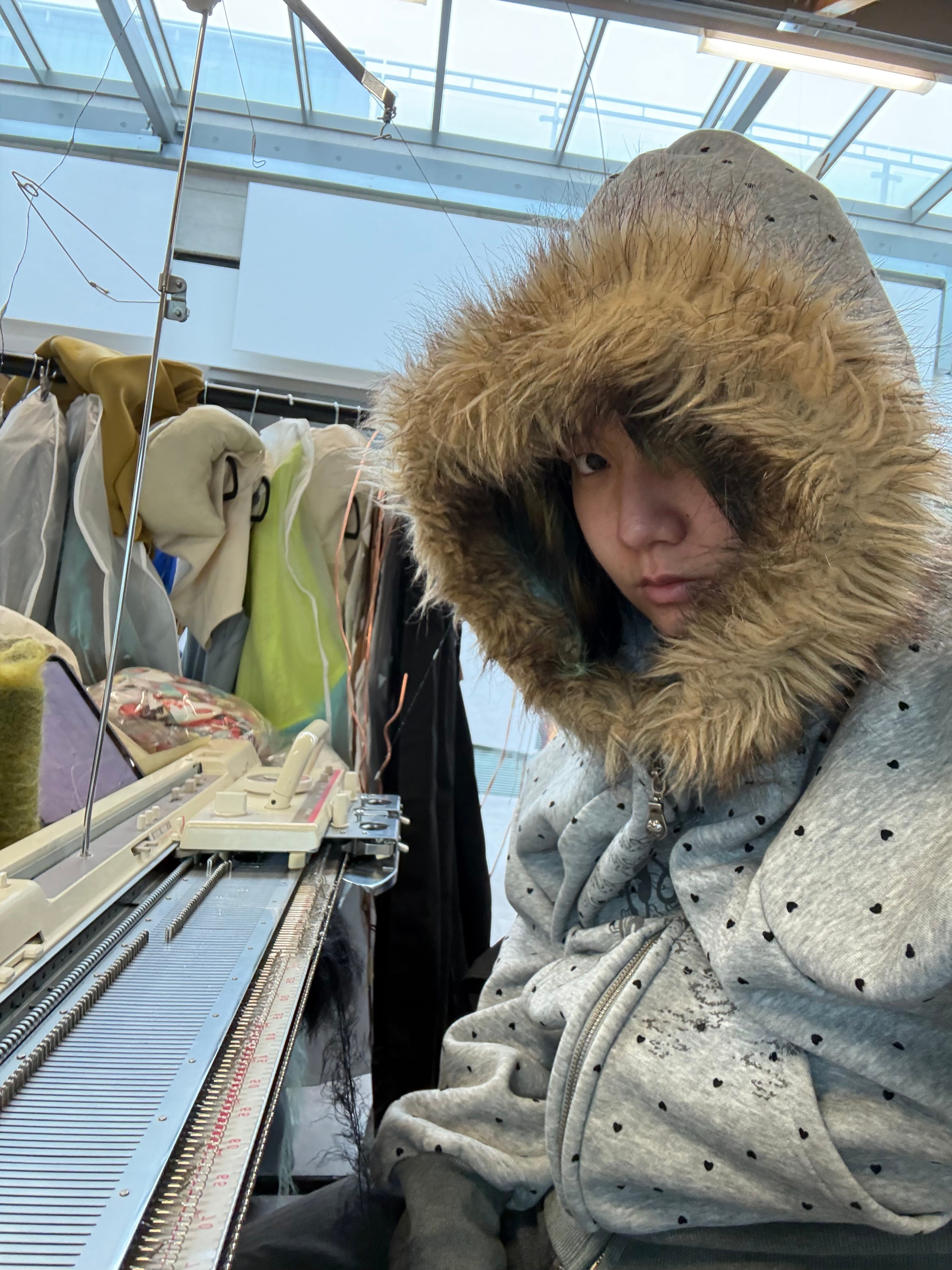
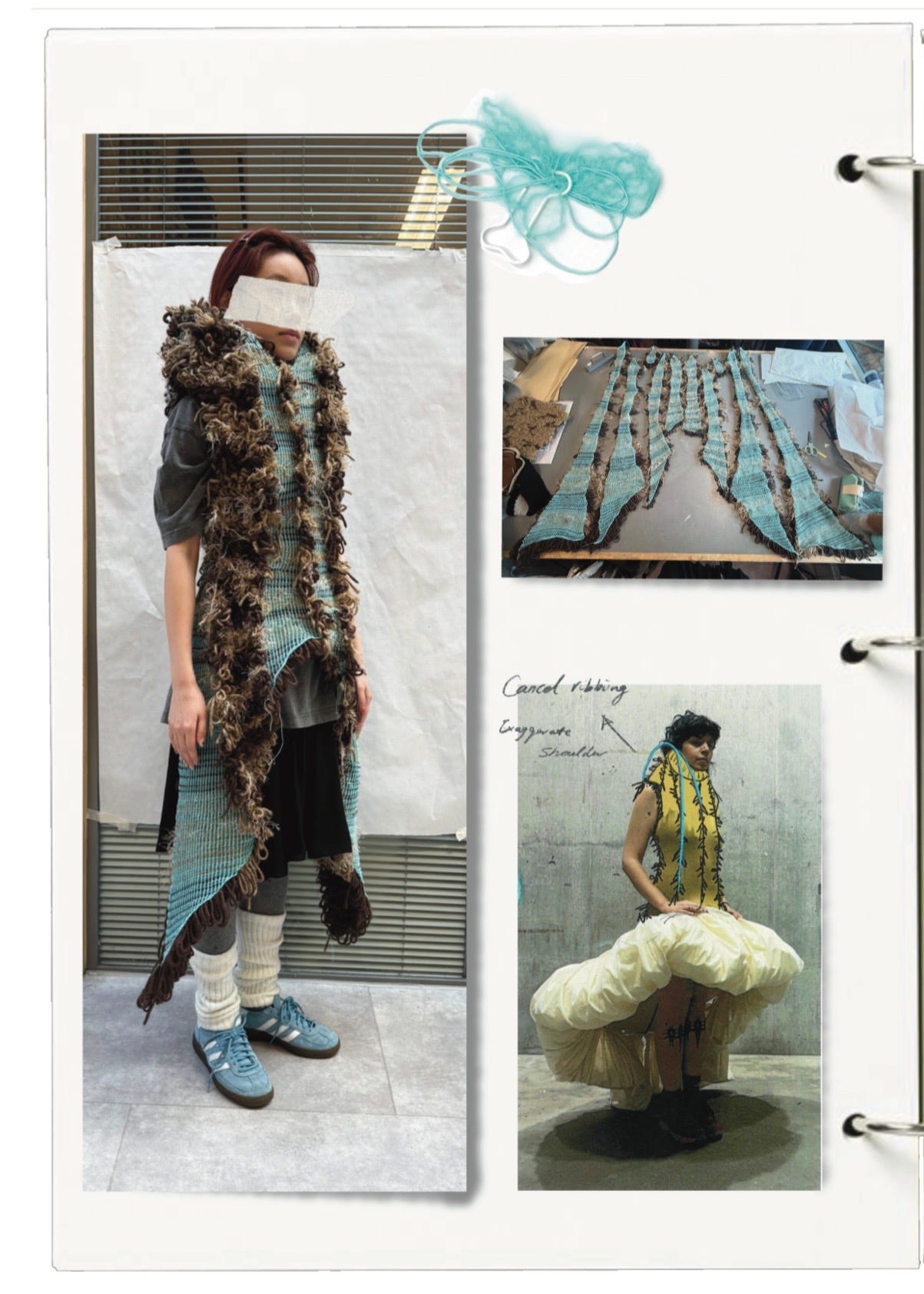
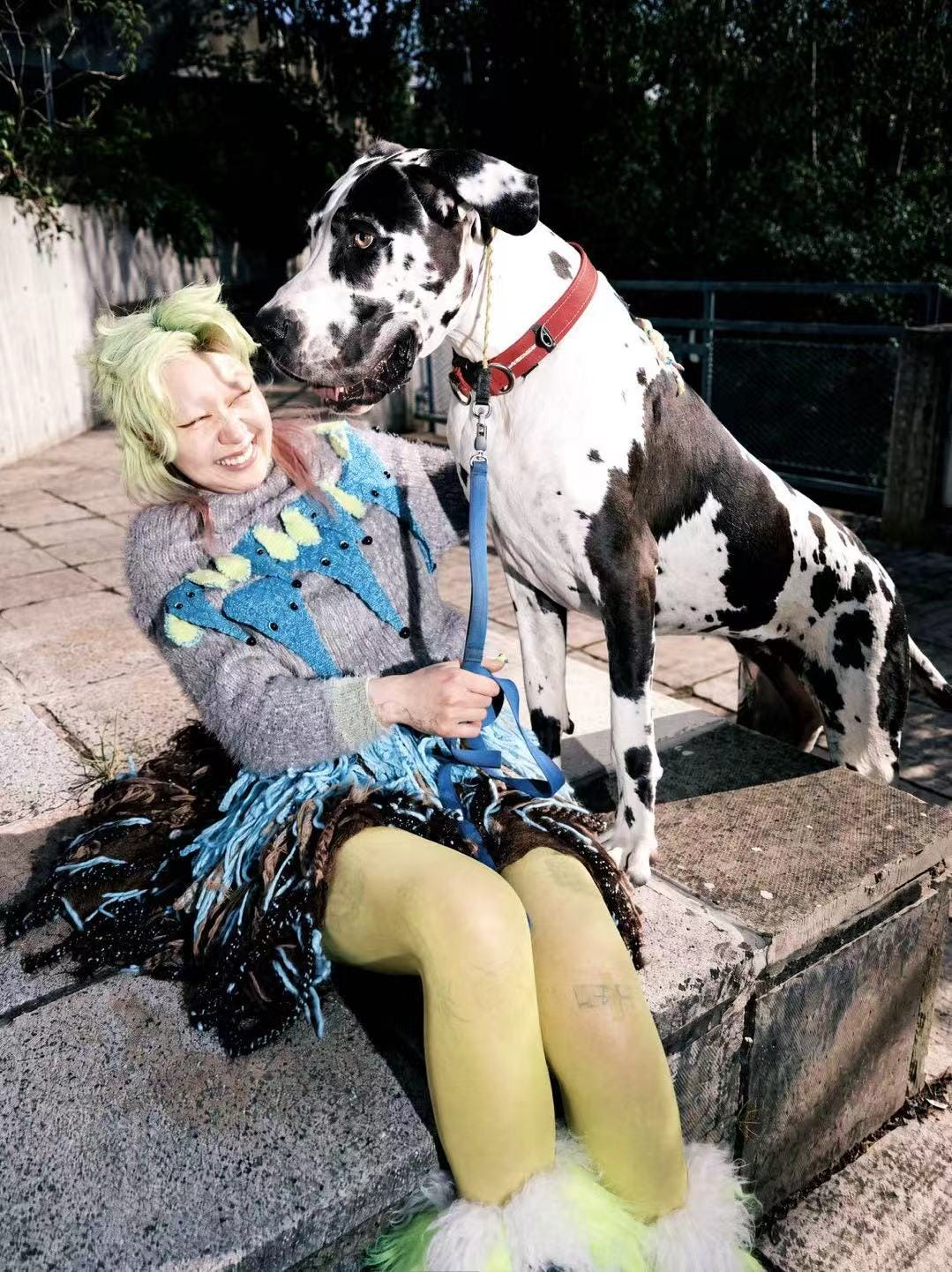
I had already been exploring non-human-centered perspectives, but always through philosophy, metaphysics, and abstract art. Then when I got my dog, my everyday life was turned upside down. I wanted to express non-human-centered perspectives in a more lived, intimate way. So all of my designs are inspired by a dog’s upward glance at the world.
What is your creative process like? Are there any creative rituals you do?
It’s almost like solving a crime scene where you have few clues to begin with, and you just collect every possible piece of evidence. Finally you put all of the evidence together. I like open-ended stories.
Do you have any overarching influences?
The idea of peripheral vision—not just visually but conceptually. I’m interested in the things that exist at the edges of our attention: animals, children, the objects we overlook, the perspectives we’re not trained to take seriously. There’s something humbling about stepping outside the human center, realizing we’re not the only ones looking, feeling, and leaving marks on the world. It’s never comfortable to unlearn the way you’ve been taught to see. But that discomfort feels honest. And every time I revisit it, whether through [John] Berger’s writing, or simply watching my dog move through a room, I find something I missed before.
What is your memory of when you first got into fashion?
My mom. She’s a knitter, so all of my childhood outfits were handmade and styled by her. But I had zero knowledge of pattern-making and sewing. I learned how to make my first denim jacket from YouTube.
Do you have a favorite designer or runway show?
Maison Margiela Spring/Summer 2024 Artisanal by [John] Galliano.
Zahra Al-Najjar, 27
What was the starting point for your graduate collection?
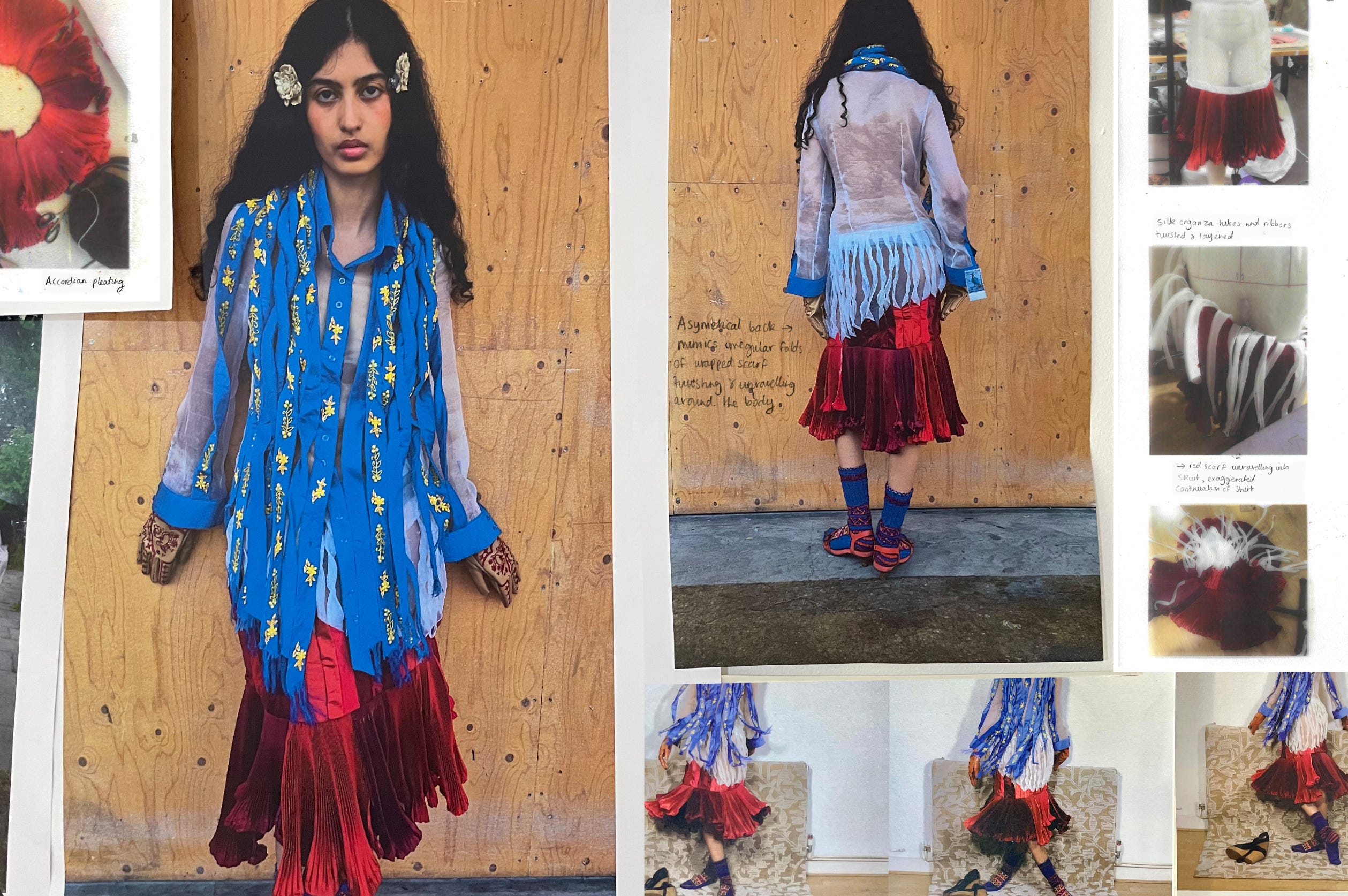
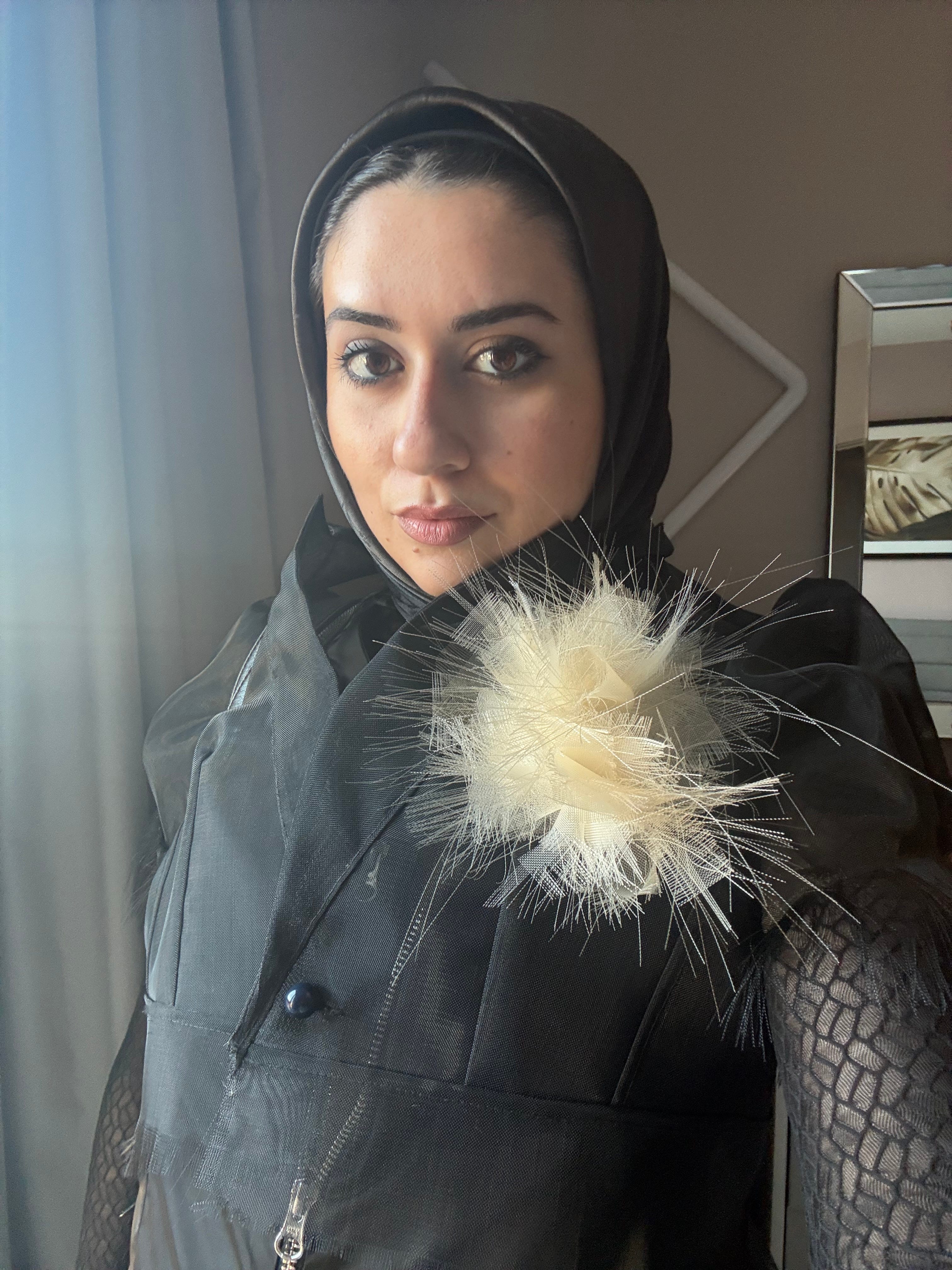
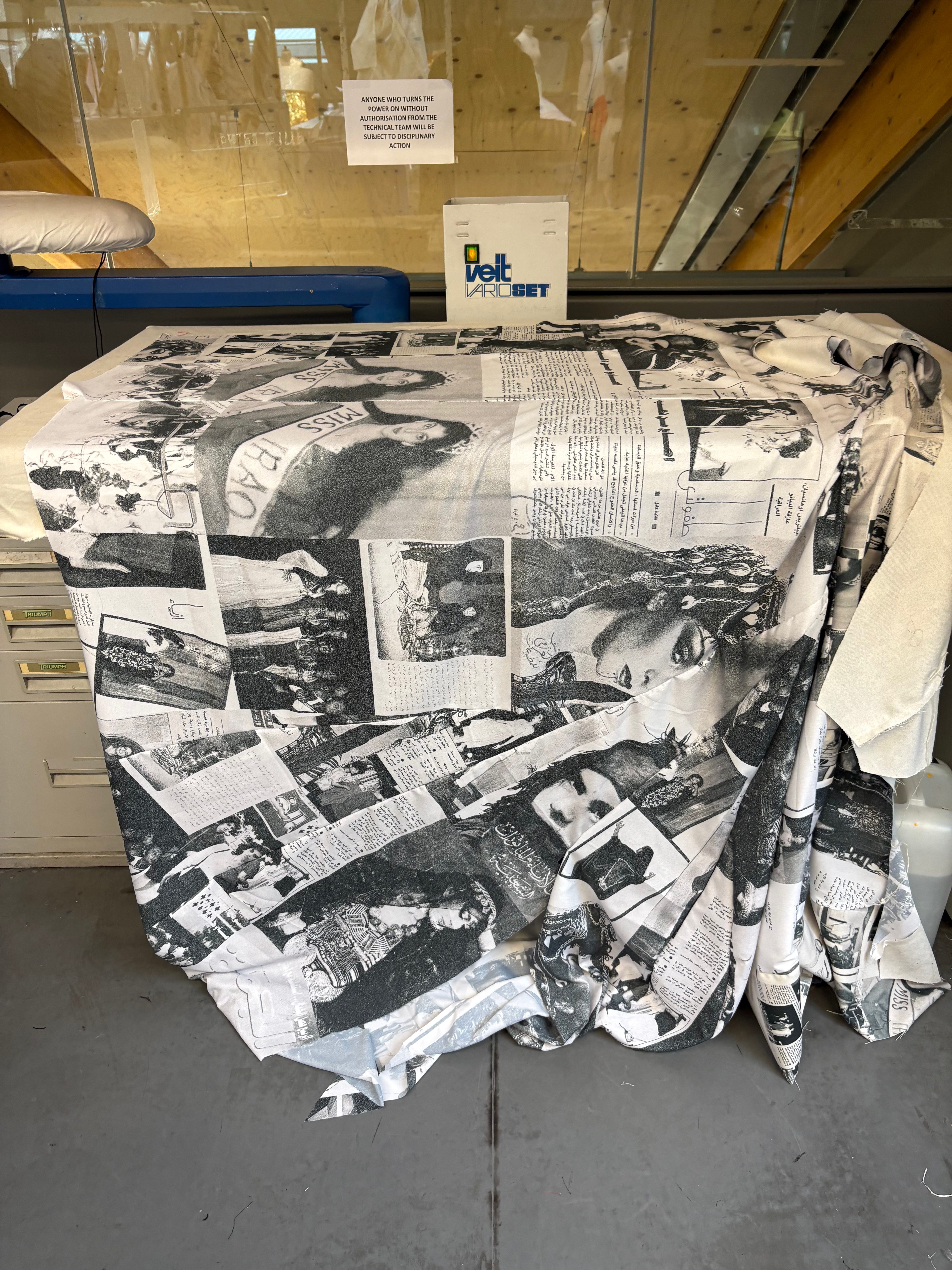
I explored objects from Arab living spaces that evoked a sense of nostalgia, translating those familiar textures and feelings of belonging from my upbringing into the collection. I was looking through magazines for inspiration when I began thinking about making these reference materials visible within the garments themselves. From there, the focus shifted towards celebrating the influential Arab women who shaped both my life and Iraqi society. I reached out to the Iraqi Print Archive for support, and using the materials they shared, I developed a series of prints that became central to the collection.
Which piece is the heart of the collection?
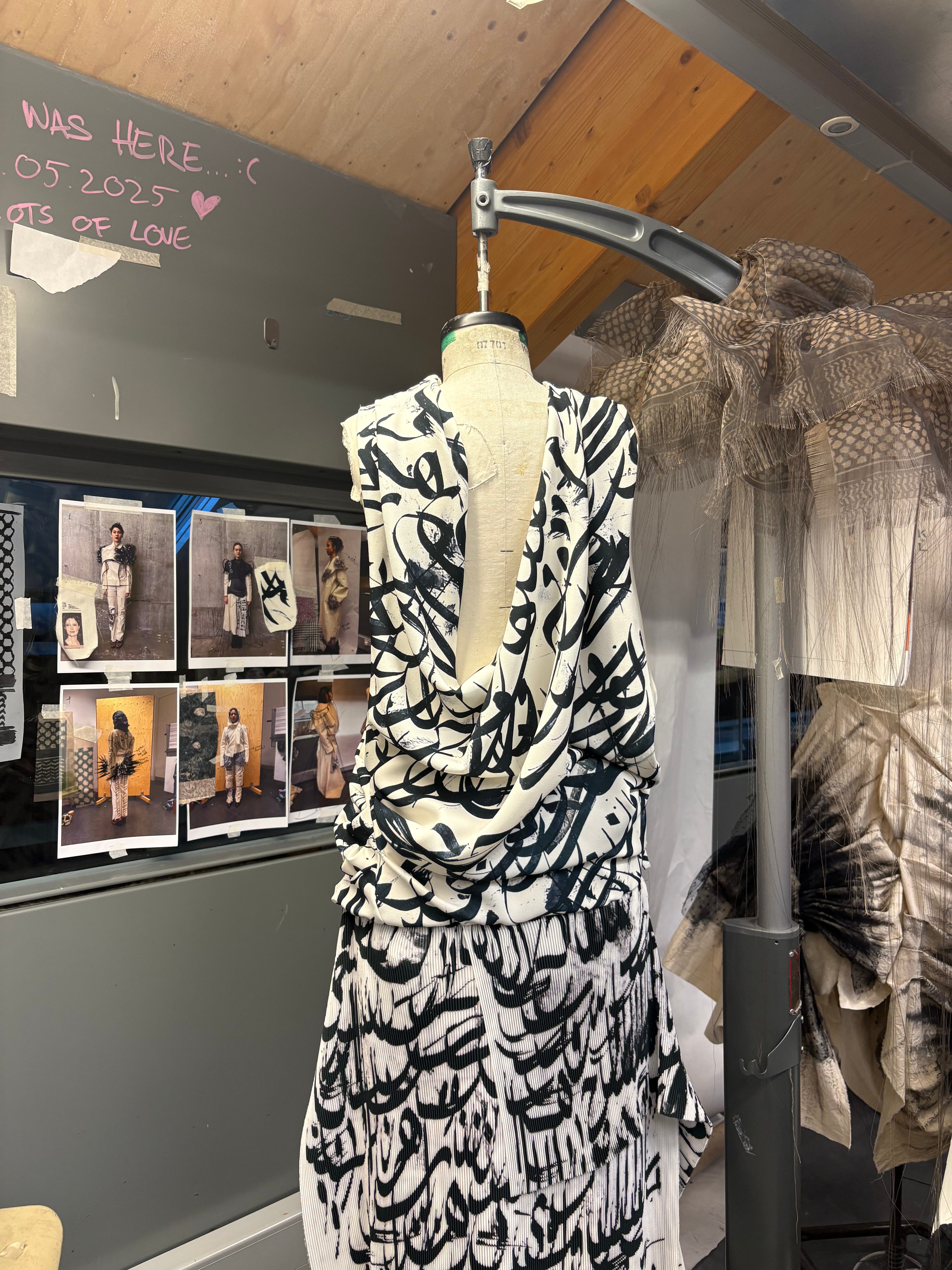
The calligraphy dress. It was created in collaboration with the incredible artist Nayab Ahmed, who traveled to Egypt to further refine her practice and produce the calligraphy using traditional materials and techniques. It was then printed onto crystal-pleated silk chiffon, which I draped directly on the mannequin to create the final silhouette.
Do you have any overarching influences that surface again and again?
My childhood growing up in an Iraqi household in the West. Even when I begin a project that isn’t intentionally about my culture, I often find myself naturally returning to my upbringing and things that evoke nostalgia. Those memories feel authentic to my experience and continue to shape the stories I want to tell through my work.
Describe the fashion scene in London right now. Are you planning on staying in the city?
I grew up in the U.K., so London really feels like home to me. Whenever I travel, I always look forward to coming back. The fashion scene is a little quiet at the moment, but there’s still a strong creative energy here that keeps it very much alive.
What’s inspiring you outside of fashion right now?
Arab orchestras. There’s something really special about the atmosphere, as well as the way people dress—it’s an exciting expressive scene within the city.
Chi Wei, 23
What was the starting point for your graduate collection?
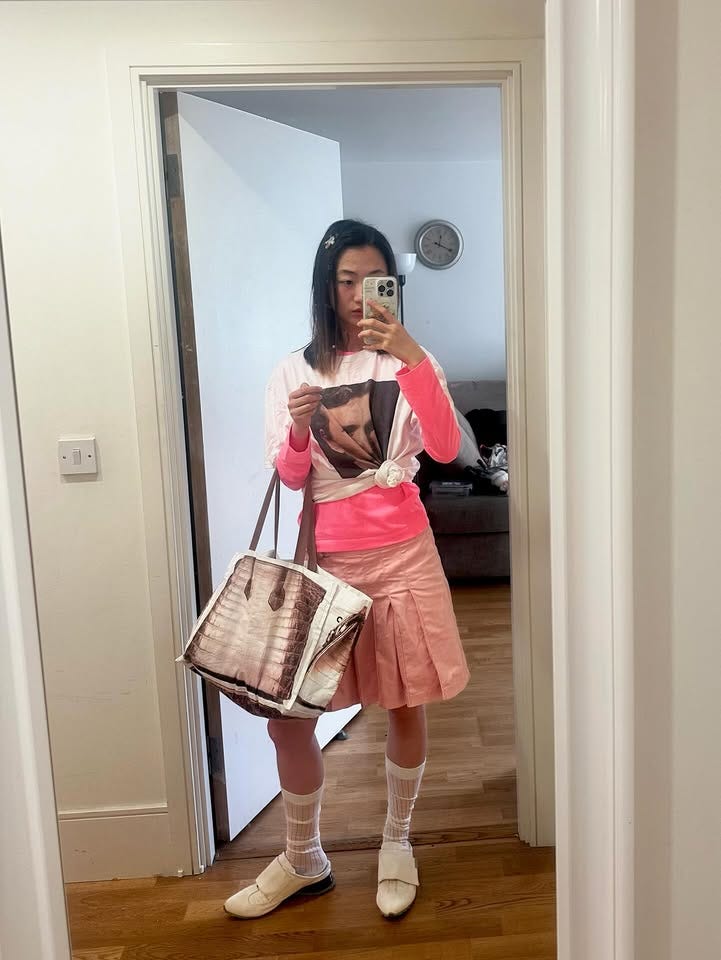
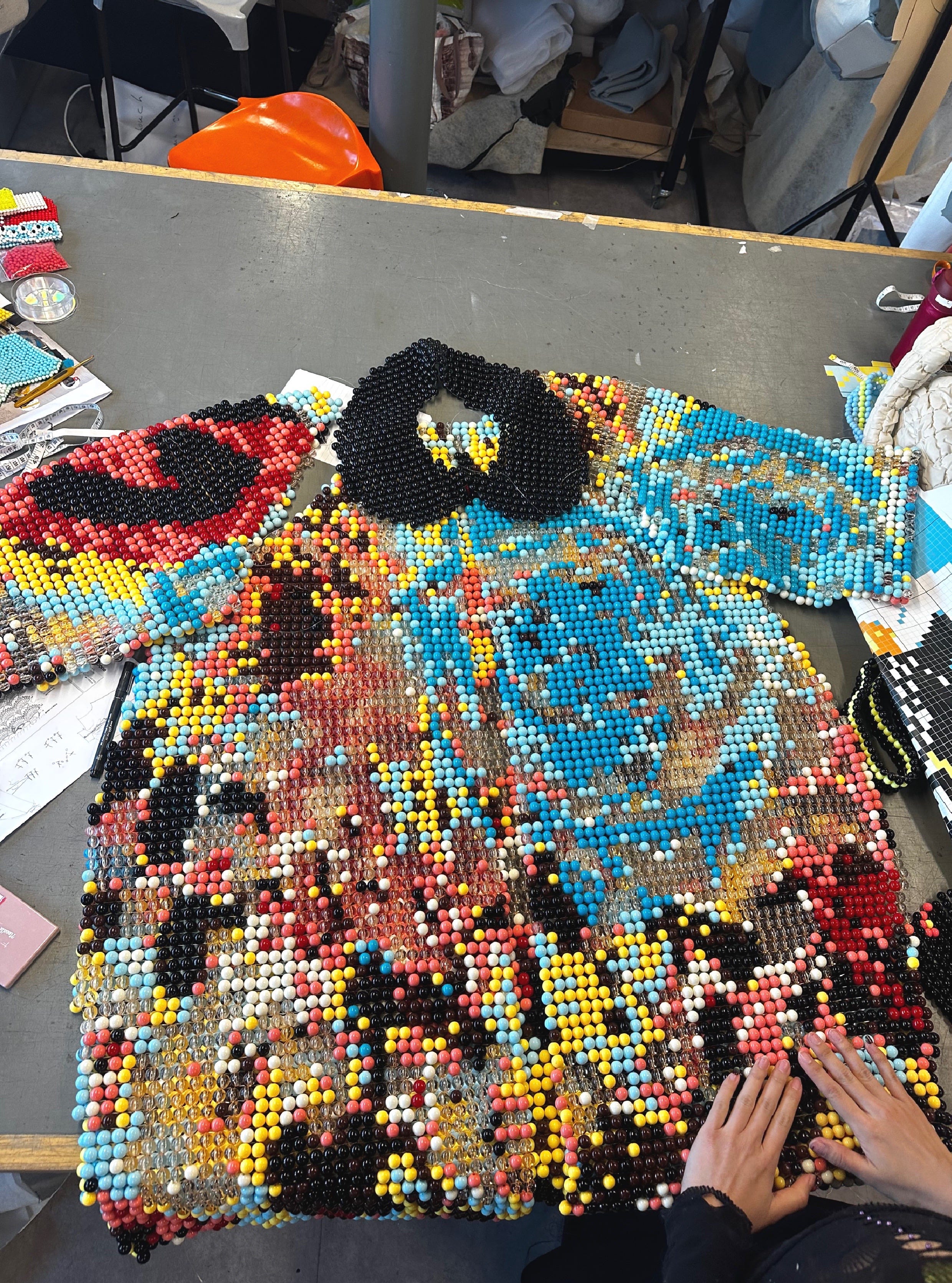
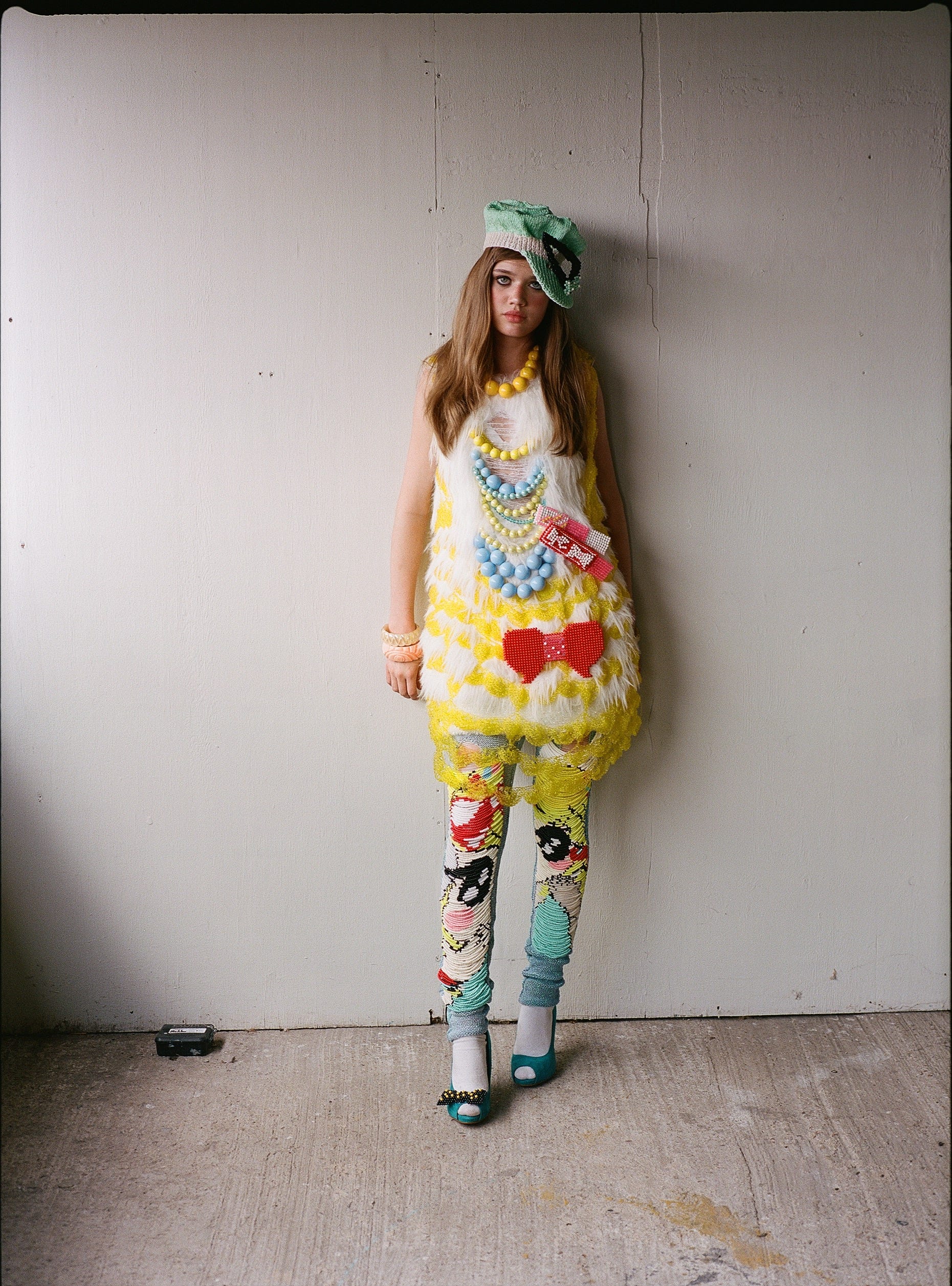
I started with childhood memories and objects that I grew up with at home—jewelry boxes, stationery, stickers, glass ornaments, fridge covers, plastic accessories, and the prints from my grandmother’s clothes. They may not look like fashion at first, but they help me build a visual world in my mind. I wanted to translate these memories into garments through materials, textures, color, and silhouette, almost as if I was reconstructing a memory box through clothing. While it’s personal, many people can recognize that feeling of nostalgia.
Which piece is the heart of the collection?
My final look: a fully beaded coat inspired by my granny’s garment print. The beads are very heavy, and the slow process of making it felt like meditating.
What was the moment that you first got into fashion?
Since I was young, I was always interested in the way people dressed, especially my family members. I remember looking closely at my granny’s clothes: the prints, colors, buttons, and small decorative details. I didn’t understand fashion as a profession, but I was already attracted to clothing as something emotional and personal. Later, I realised that garments can hold memory.
Do you have a favorite designer?
Miuccia Prada. I love the simplicity of her silhouettes and her idea of ugly chic. She uses things that people might consider outdated or unfashionable, but through her combinations they become beautiful and desirable. That way of thinking has influenced this project. Nothing is truly ugly; it just needs to find the right place to exist.
One thing every aspiring fashion student should know?
Sometimes an idea only becomes strong after you struggle with it for a long time. Don’t be afraid of making mistakes, because many good ideas come from the process of trying, failing, and fixing.