


Published in Takeaway Spring/Summer 2026. Get your copy here.
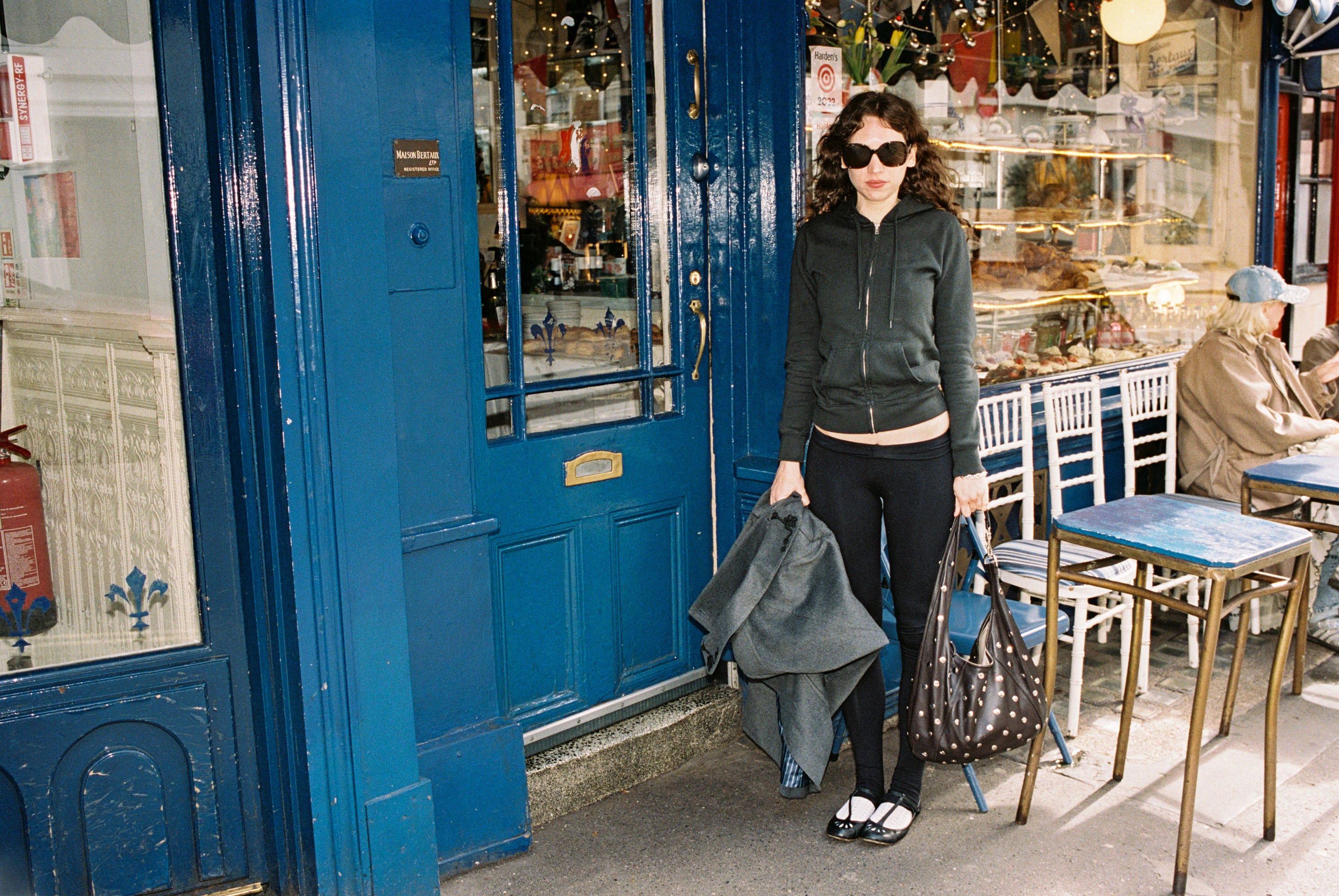
Interview by NICOLAIA RIPS
Photos by ROSIE MARKS
Bertie Brandes: I can’t believe we’ve never properly met. Do you not come to London quite a lot, or am I wrong?
Nicolaia Rips: No, I’m totally in New York all the time, which is lame. I love it. You grew up in London, right?
Bertie: Yeah, on a beautiful road called Well Walk, which had three wells on it.
Nicolaia: What were you obsessed with as a child?
Bertie: Fame and femininity, two things I daydreamed about endlessly. Also, fairies and looking for them on Hampstead Heath.
Nicolaia: Where do you go to get inspired now?
Bertie: The Prince Charles Cinema and Judd Books.
Nicolaia: How has everything been?
Bertie: Well, now The Moment is out everywhere, everything is done, and I’m working a job for a creative agency much less than my normal day rate. Slammed back into reality. Truly.
Nicolaia: Was it vulnerable to put a movie out into the world?
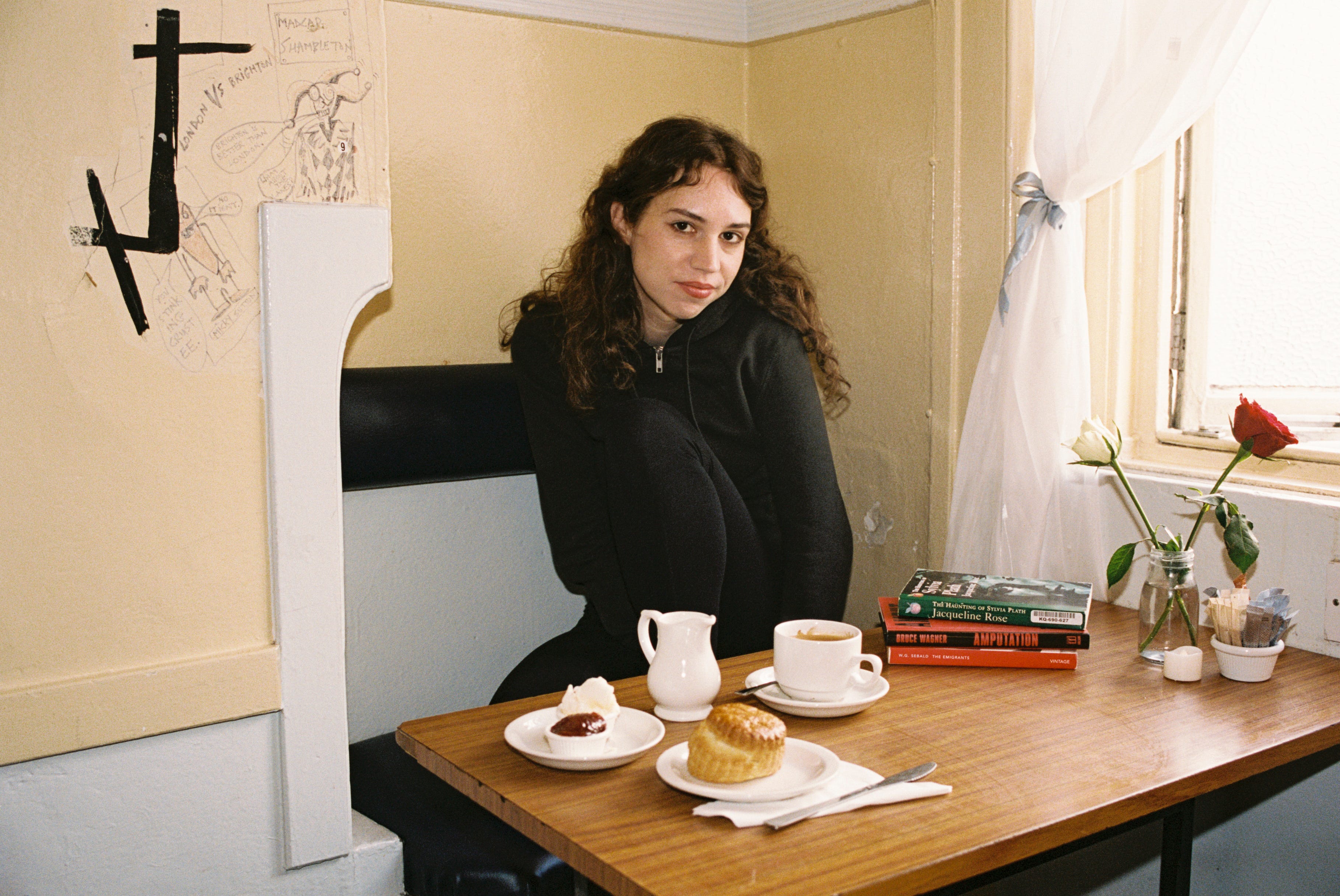
Bertie: As it was happening I kept saying, “This just better mean that my life changes. I’m so fucking exhausted.” I’ve been in the advertising washing machine for so long, and my life has not changed yet. I will forever be on the side of the bitter and upset artist, I guess. That’s what we all are, isn’t it?
Nicolaia: There’s this feminist undercurrent in your writing. That scene where a woman is the advert—it’s like, Yes, she is the ad. It made me think about how that kind of expectation is placed more on female artists than on male artists.
Bertie: There are four soul-of-the-movie scenes, and that is one of them. I think people are getting it because it’s true. Everyone’s an influencer. You can be a musician, an artist, whatever, but in the end you’re getting people to buy stuff.
Nicolaia: At this point, the pure influencer is a dying breed.
Bertie: I would argue that the pure influencers are now the closest thing that we have to artists, in that they have a really singular vision that they execute really amazingly. God, what a world we’ve ended up in.
Nicolaia: What’s on your Explore page?
Bertie: It’s mainly this guy who looks like Luigi Mangione telling people it’s not optimal to drink milk from a depressed cow that needs therapy. And I agree.
“I would argue that the pure influencers are now the closest thing that we have to artists, in that they have a really singular vision that they execute really amazingly. God, what a world we’ve ended up in.”
Nicolaia: Did you ever see yourself making movies when you were in the London zine-girl world?
Bertie: Not in the Mushpit days. I just wanted to run a magazine then. But I do feel like everything I write has a very visual element to it. For me, it is far simpler and less intimidating to write in a world where dialogue is pretty much the only way that you can find out about someone.
Nicolaia: No, I agree. I like to write through myself, and I don’t know if I’ve gotten to the point with my writing where I’m ready to detach from the mothership.
Bertie: A lot of the time I wonder if writing emails is what it means to be a writer. But then when I lie in bed and I’m like, What does it mean to be a writer? I pick up a zine that I made that five people saw and I’m like, Yeah, okay this is proof.
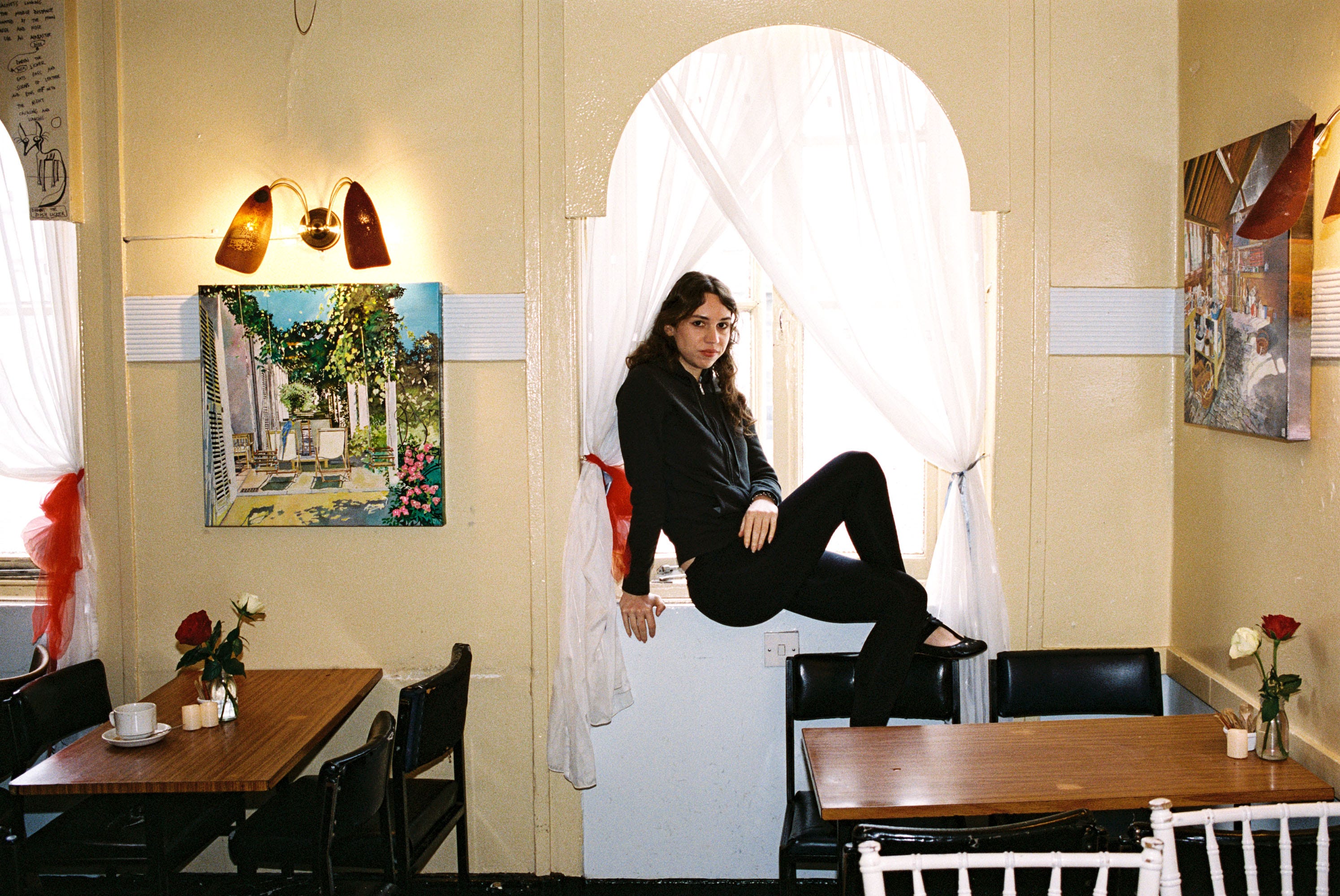
Nicolaia: Being prolific is expensive. To write anything you’re basically losing money. It’s also sad because the way that I process anything is through writing about it.
Bertie: It’s like, this is your precious gift that you discovered as a teenager, and now you’re compartmentalizing it around a specific job... I guess it’s a first-world problem, isn’t it? I also really struggle with trying to write in a kind of social media-y voice. It’s weirdly the same as this whole reading culture; I’ll always write something to be read at a specific event because I can’t imagine otherwise.
Nicolaia: That’s brave.
Bertie: Well it’s my only option. Otherwise it would be like trying to paint a wall with a cup of tea. We also need to stop pretending that we’re not all deeply disappointed as soon as someone starts reading. It’s so humiliating. I’m like, You guys are just looking at my outfit.
Nicolaia: The idea as a writer of having a body and thinking about it from multiple angles. Tiny violin.
Bertie: Absolutely. I mean, it’s like my love for really shitty images. All of my zines have been the lowest-effort iPhone photos. I’d love to make a zine that plays music like a Christmas card when you open it. Let’s use A.I. for something that matters.
Nicolaia: What would you play?
Bertie: I’m really interested in some shitty polyphonic ringtone but then, God, my voice reading something completely different from the text—that’d be amazing.
“I’d love to make a zine that plays music like a Christmas card when you open it. Let’s use A.I. for something that matters.”
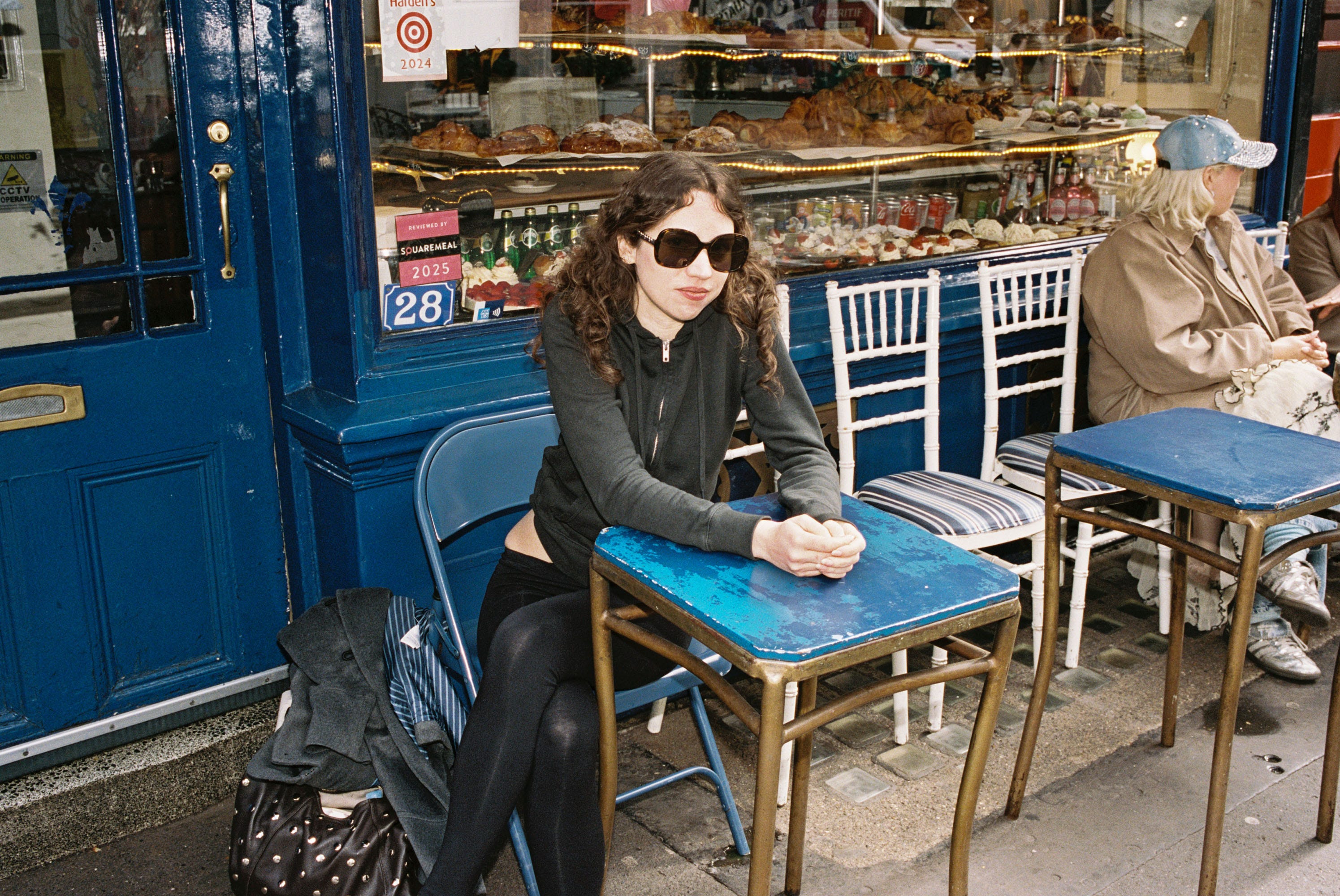
Nicolaia: People aren’t talking about that enough—how magazines can evolve. Why can’t you have a little voice speaking to you from the center?
Bertie: I love the classic perfume smell in a magazine too.
Nicolaia: I’m obsessed with Smell-O-Vision. I follow this perfumer who is basically recreating this scent from Scent of Mystery, which Elizabeth Taylor had a cameo in. They created a perfume for her character that they sprayed in the theater.
Bertie: So we can smell her? Wow, you’re giving me a million ideas. Whatever film Aidan [Zamiri] and I do next needs to have this. But who’d make it?
Nicolaia: You need to find an inventor.
Bertie: It’s such a lost profession. It’s actually so depressing what we consider innovation today. Seventy percent of the shit I’ve seen in the last 10 years is so boring. We have to start dreaming big—and then, even bigger than that.